Meditations on Faith in a World Observed

Month: June 2024

The blessings of good seeds planted

The Bible says: “Start children off on the way they should go, and even when they are old they will not turn from it.” (Proverbs 22:6). My dad studied foreign languages at the University of Iowa and then served in the Air Force as a translator during the Korean War. In our eyes as his children, he was truly filled with the joie de vivre. On his one day off each week (Wednesday), he would rise early and begin work on his many “projects” around the house. When I wasn’t in school, I would shadow him as he taught me how to use tools and to do easy maintenance on cars and lawnmowers, light carpentry and home repair. He had plenty of stress from his work at a large department store, but he channeled it into positive energy as a “man for others”. He would often have one beer in the evening to relax. (His beer of choice was Texas Pride at $1.99 per six pack – only slightly more stimulating than water.) Each summer he would take the entire family camping in which many nights we would all sleep together in a big canvas tent. Many fathers go fishing with their son. It’s less about catching fish, but more about spending time alone together, sometimes in silence as the boy gathers his thoughts and asks important questions. Jesus never had a plan for what the perfect society would look like.Instead, Jesus gave us a process, a way of listening, a way of emptying ourselves so that we might be filled by God’s spirit. He tells this parable about the seeds scattered on the land. The farmer is only involved in the sowing of the seed and in the final harvest. But the growth of the seed is God’s work. It is mysterious and not something caused by human effort. As I write this, today is Father’s Day. A father’s privilege is to be the sower of seeds in the lives of his children. He sows the seeds of self-confidence, of kindness, of gentleness, and of faith in God, the Father of Jesus. That’s all he has to do. God will do the rest of the work. Mostly by their actions, fathers shape how their children see the world. As kids mature into adults, they make their own choices about what to do with their lives, how to treat others, and how to understand their relationship to God. But their fathers have helped lay the foundation for those decisions. Thank you, Daddy, for all the big and little things. Happy Father’s Day! – — Fr. Jim

A shout out to the good people in the middle

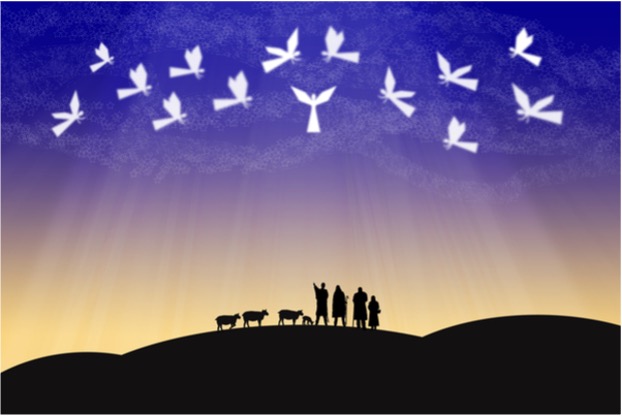
When saintly Pope John XXIII wrote his encyclical “Peace on Earth” he addressed it not only to Catholic Christians throughout the world, but also to “all people of good will”. I like this term because it speaks of people who are sincere, thoughtful, and are not beholden to a particular religious ideology or political platform. These are people who discern what is good using their own common sense and the inherent goodness in their hearts. Thus, it seems to me, People of Good Will believe that work is a part of our human dignity, and everyone should be encouraged to work for a living instead of just receiving handouts. People of Good Will would say that gender identity at birth is most appropriate. But boys with some feminine traits and girls with some masculine traits should be loved and respected for exactly who they are. People of Good Will believe that individual initiative and enterprise (a free market) should be encouraged, but that it must not damage the common pool of resources that we all share – clean water, air, and earth.  People of Good Will recognize a qualitative difference between an unborn fetus and a newborn baby. We do not reflect the image of God in our feet and fingers but in our awareness and our capacity to love in relationship with others. People of Good Will realize that a democracy can only function if election results are accepted by everyone, even those whose preferred candidate did not win.  People of Good Will recognize that ignorance leads to fearmongering, which leads to suspicion, and suspicion leads to hatred. And God is never found in hatred. Finally, People of Good Will know how to turn off all the noise around them and are in touch with the truth that is deep within their hearts. Besides, they are too busy caring for their children and working for a living. On the night of the Savior’s birth, the angels sang “Glory to God in the highest and on earth peace to people of good will.” The People of Good Will are the first to hear the Good News because they are not part of a tribe. These are the ones who seek and love the Truth, the only place where God is found. – – – – Fr. Jim

The wisdom of the scribe

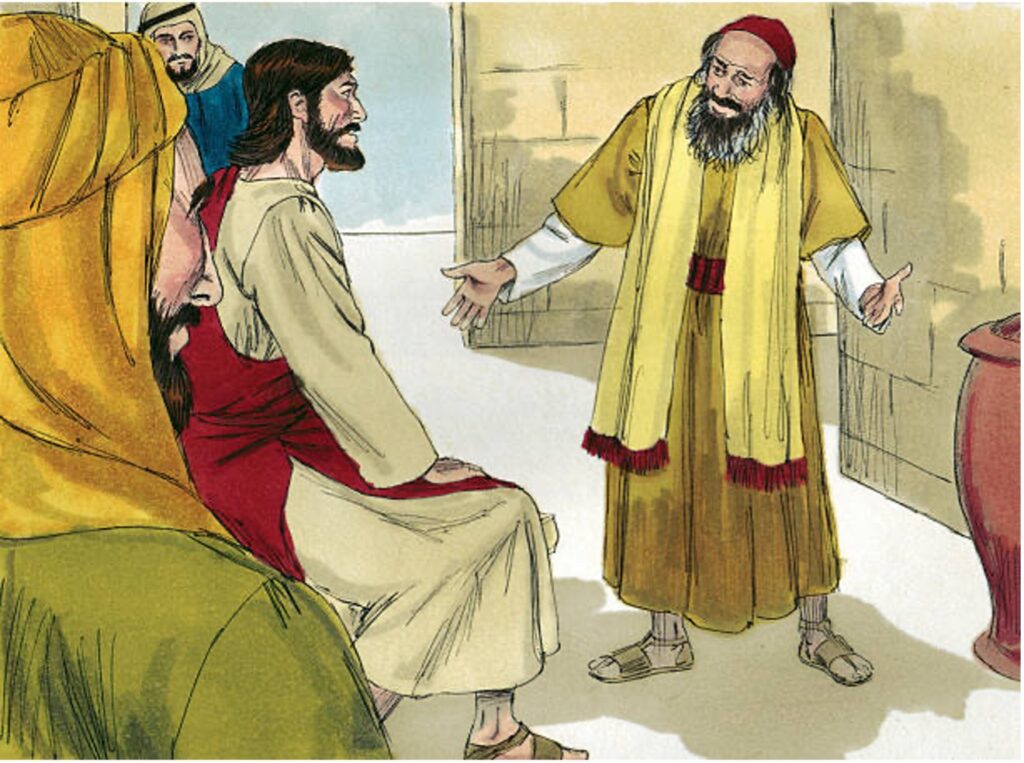
Last year our St. Francis Medical Mission to Belize included two doctors, four dentists, a chiropractor, and a diabetes nurse. We also had two Lions Club members who did eye screenings and offered both prescription lenses and sunglasses, all collected in the U.S. Over the six days in clinic we saw and treated over 1000 people. But each case was sadder than the last. We treated a woman who was blind from diabetes along with her daughter who was deaf and mute, likely from a childhood disease left untreated. We helped a crippled man who had lived for 6 years with a spinal injury and simply wanted some relief from his suffering. Our dentists had to extract rotten teeth from children who had never seen a dentist. We ended each workday with dinner and Mass at the rustic retreat center where we stayed. It was then that we could reflect on the day in the light of the Scriptures. The Jewish scribes had knowledge of the law and could draft legal documents and contracts. One of them asked Jesus which was the greatest commandment. When Jesus responded with “love of God and love of neighbor”, the scribe affirmed his answer, but added something. He said to Jesus: “You are right in saying that God is One and there is no other … to love him with all your heart, your understanding, and all your strength, and to love your neighbor as yourself is worth more than all burnt offerings and sacrifices.” When Jesus heard this, he said “You are not far from the Kingdom of God.” (Mark 12:28-34) To love God by loving our neighbor is more important than all of our rituals and sacrifices. When I heard this passage, I knew that these missionaries too are not far from the Kingdom of God. – – – Fr. Jim

The people behind the numbers

One podcast that I enjoy is called “Marketplace” from NPR. It reviews the day’s economic numbers – e.g., inflation rate, jobless rate, consumer price index – as well as providing on-site interviews with small business owners, corporate managers, and everyday workers. It is a good reminder that the economy includes people with real needs and hopes and dreams. One of the oldest principles of the Judeo-Christian tradition is that the goods of the earth are destined for all, without exception or exclusion. The U.S. has a “mixed economy” in which both private and public institutions have roles to play.  Private businesses and competition create goods while providing work and encouraging innovation and personal initiative. But the right to private property is linked to a duty to provide for the needs of all. Thus, public institutions (government) exist to ensure that the basic needs of all its citizens are being met. In a free market, private businesses exist to make a profit while providing the best goods possible. But if allowed to run free without constraint, much damage can be done. For example, monopolies can form and drive up prices of goods to their benefit. The production of goods often produces water and air pollution which adversely affects all citizens. Businesses can also be discriminatory in hiring practices and can create wealth inequality by placing the profits in the pockets of a few at the top. The bottom line is that the common good is the proper domain of government. As Pope St. John Paul II wrote: “The market should be appropriately controlled by the State so as to guarantee that the basic needs of the whole of society are satisfied” and, especially, the needs of the most poor and vulnerable. Catholic social teaching on the economy doesn’t offer policy, but it gives general principles to be followed. It reminds us that, behind the numbers, there are real people. – – – Fr. Jim

© 2026 The Yellow Wood

Theme by Anders Noren — Up ↑