Meditations on Faith in a World Observed

Month: September 2024

A tragedy and its legacy

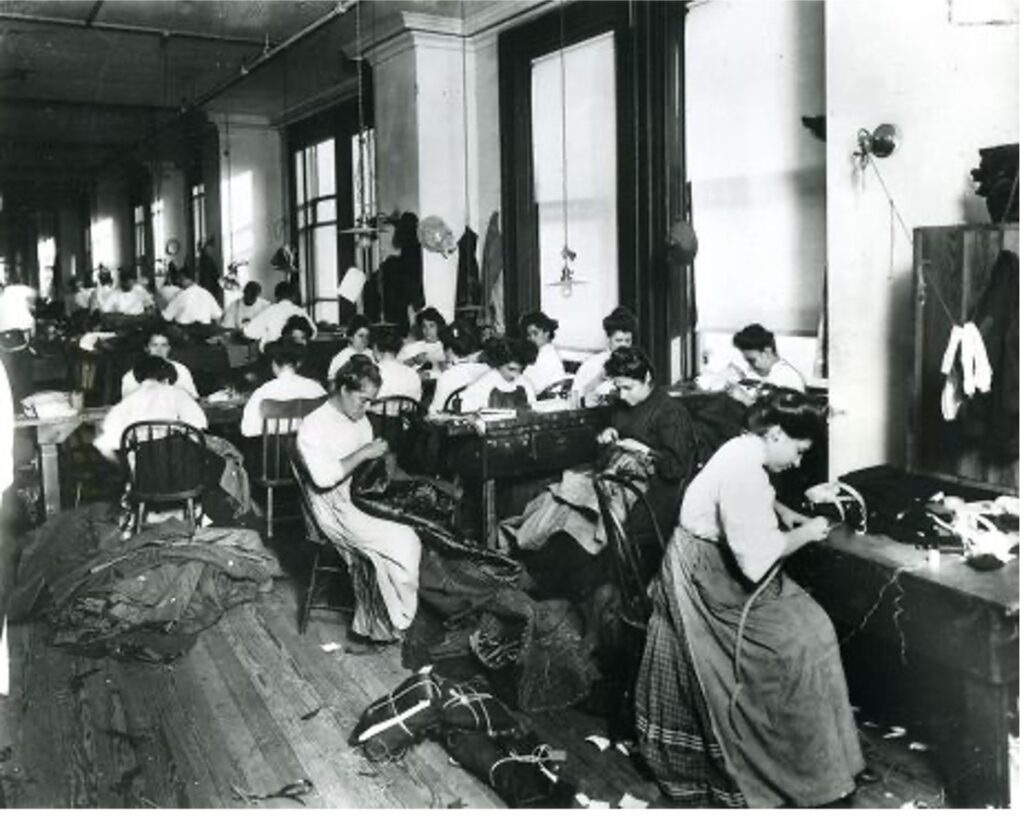
A “sweatshop” is any workplace in a very poor work environment, including low wages, excessively long hours, and unsanitary or dangerous working conditions. On one trip to Cambodia, I watched hundreds of women and children enter a garment factory, a sweatshop, early in the morning. But sweatshops were also common in the US in the early 20th century. The Triangle Shirtwaist Factory in New York City employed mostly women and girls to sew a blouse that was in high demand. Many of these girls were from Italian families escaping conditions of hunger. Or they were from Jewish families, escaping persecution in Russia or Ukraine. The daughters knew they needed to work in order to pay for rent and food for the family.  After all, economic security was the American dream. On Saturday, March 25, 1911, a fire in the factory killed 123 women and girls as well as 23 men who died from the fire, smoke inhalation, or from jumping to their deaths from the 8th, 9th, and 10th-story windows.  The doors of the factory had been locked by their supervisors from the outside to prevent workers from taking unauthorized breaks. There was no place to go but out the windows. The two youngest girls were 14 years old. One of the witnesses to this tragedy was Frances Perkins, who quit her job in order to make sure that these workers did not die in vain. Through her efforts, fire safety measures were put in place and the work week was limited to 54 hours a week. Many years later, St. Pope John Paul II wrote an encyclical on human work, Laborem Exercens, in which he argues that workers have a right to proper wages, appropriate rest, safe working conditions, and the right to organize. These are all measures of human dignity and respect for life. – – – Fr. Jim
Missing the mark

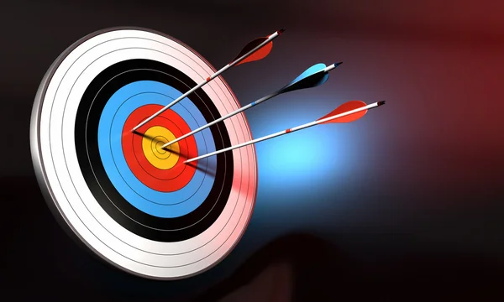
After college I spent a few years saving money to buy my first new car. When I finally went to pick it up, the saleswoman told me that I should wash and wax it once a year. Why? So that I would run my hands over every inch of the body and find any dents or scratches or rust spots that were beginning to form. We do the same thing when we prepare for the sacrament of Reconciliation. Here is a simple way to do an examination of conscience. In this order, look for i) serious sin, ii) sinful habits, and iii) minor sins. Write these down as you do your examination. God is Love Itself, so serious sins are any acts or feelings of hatred (anti-love). These include hatred of or bitterness towards any individual or groups of individuals – e.g., a political figure, a co-worker, Muslims or Jews, your mother-in-law, etc. There is no love of God when there is hatred of neighbor. Second, do you have any sinful habits that affect your ability to fulfill your vocation? An older priest once shared with me that smoking was a serious sin for him because it was an obstacle for getting close to his parishioners. Minor sins include missing Mass out of laziness, forgetting to do our household chores, snapping at someone out of a burst of anger, and so forth. The Biblical words for sin literally mean “missing the mark”. When we are aiming at love of God and neighbor but miss the bullseye, then we are committing venial, or minor, sin. But when we completely turn away from the target and point our arrows in the opposite direction, away from the God of Love, then we are committing serious sin. By a good examination of our conscience we can know the difference. – – – Fr. Jim

The most sacred symbol in creation

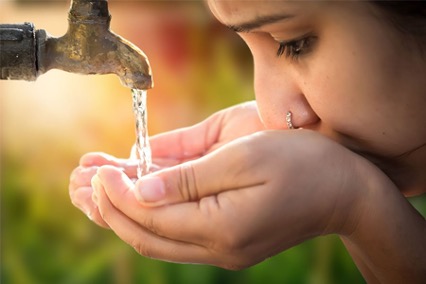
Water is life! Our bodies are about 60% water and the brain alone is 75% water. Every living creature – plant and animal – needs water to supply nutrients for growth and well-being. It is no wonder then that all religious traditions have held water as the most sacred symbol in all of creation. Native Americans revered water as a sign of the interconnectedness of all forms of life. Jewish and Muslim believers do ritual washings of the hands and body before times of prayer. The Bible begins in a garden nourished by a river rising in Eden (Gen 2:10), and it ends when “an angel showed me the river of life-giving water…flowing from the throne of God.” (Rev 22:1-17). Water plays the most prominent role in the first sacrament received in the Catholic Church. The priest or deacon first blesses the water of the baptismal font by calling upon “God, whose Spirit in the first moments of the world’s creation hovered over the waters, so that the very substance of water would even then take to itself the power to sanctify.” UNICEF estimates that more than 1,000 children under five die every day from illnesses caused by unsafe water, sanitation and hygiene. These are deaths that can easily be prevented by providing clean drinking water and hand-washing stations.  This past weekend I was privileged to be a part of the seventh OU International Water Symposium in Norman, OK. Five water experts from across the nation were summoned to select the next winner of the OU Water Prize, an award given every 2 years to someone who is working to meet the water needs of disadvantaged peoples across the globe. Each time we sprinkle ourselves with holy water, we are sprinkling ourselves with the gift of the Holy Spirit. – – – Fr. Jim

© 2026 The Yellow Wood

Theme by Anders Noren — Up ↑