Meditations on Faith in a World Observed

Month: March 2025

Making holy the cross that we bear

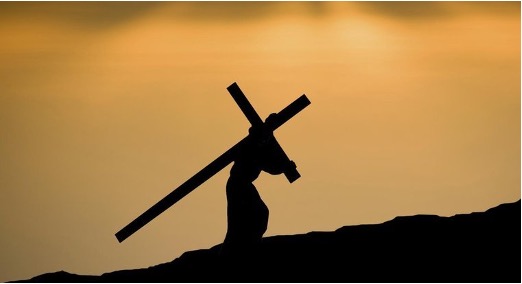
When Jesus called his disciples, he said to them “Follow me”. He never asked for admirers or worshippers. He was asking for followers. An admirer is someone who sees the beauty of the teacher but keeps his distance. Jesus wants followers who will walk with him, every step of the way, including through his passion and death. Thomas a Kempis wrote: “There will always be many who love Christ’s heavenly kingdom, but few who will bear his cross.” Each of us has, or will have, a cross to bear. But the Christian must not only accept suffering; he must make it holy. Merely accepted, suffering does nothing for our souls. We might even become bitter. Endurance alone is not enough. We make our suffering holy but giving meaning to it. If our cross is living with someone who hates us or makes our life difficult, we bless that person by praying for them. If our cross is caring for a sick or elderly loved one, then we are pouring our love out for them as Christ poured out his blood on his cross. If our cross is our own illness, then we unite our cross to Jesus in prayer for the healing of the world’s sin. We become intimate participants in the redemption of sin by the cross of Jesus. Whatever our cross, it always serves to jolt us out of our complacency. It allows God to destroy something within us that needs to be destroyed – our pride, our comfort, the illusion of permanence. There are only two ways to grow in Christian maturity – through prayer and through suffering. We choose to pray; but the suffering happens to us. But we then choose to make it holy, uniting it with the suffering of Christ. – – – Fr. Jim
We begin with ashes . . .

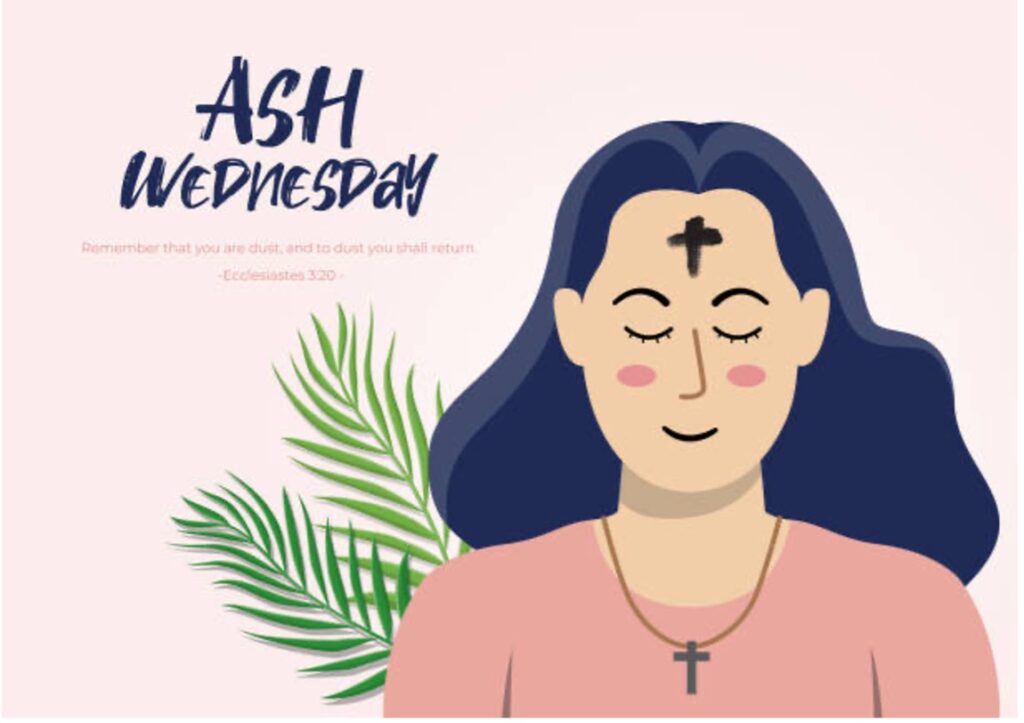
I was working as a Catholic chaplain at Children’s Medical Center in Dallas, and one of my first patients was a teenager, about 18 years old. He was dying of leukemia, and his body was thin and frail. But as I spoke to his family and saw the photos around his room, I realized that he had once been a strong, healthy football player for the high school team. His journey was quicker than ours, but all of us will make that same journey, from ashes to ashes, from dust to dust. Our bodies are only the fragile vessels into which God has poured the spirit of Juan or Maria or Mike or Jimmy. If I could, I would mark not only our foreheads with ashes, but also our entire face, our hands and our feet.  And I would ask you to do the same to me. But if cancer causes death to the body, sin causes death to the spirit. When the beautiful Tamar had been deceived and humiliated by her half-brother, Amnon, she put ashes on her head and tore her clothing (2 Sam. 13:19). Her grief was not for her personal sin but for the sin of the world and how that sin affected her. We begin the season of Lent with ashes because we begin with the harsh realities of life. There IS sin and brokenness in the world. There is our own sin, and the sin of others. We need a Savior to walk with us in this world of sin because it is too dreadful to do it alone. If we can begin at this place, in this state of dreadfulness, then our own small discipline of Lent will begin to have meaning, meaning that will lead us one day to the Resurrection. – – – Fr. Jim

Our evolving view of God

“The sands of the seashore, the drops of rain….who can number these? Heaven’s height, earth’s breadth ,,,, who can explore these?” (Sirach 1:2-3)

The immensity of God befuddles us. The people of Israel were a tribal culture, and their understanding of God was as a tribal God. So in the Old Testament, God is a creator, but he is also presented as a warrior who is sometimes primitive, angry, jealous, and unpredictable. He can even be a vengeful destroyer of innocent people (e.g., 1 Samuel 15:3; Judges 14:19). In a later time, the prophets Isaiah and Jeremiah understood God to be a shepherd, a comforter, and a defender of the poor. Jesus’s own experience of God was as one who desires to relieve the misery of the poor and freedom of the captives (Luke 4). He is a patient Father who welcomes the return of his wayward children. In the ancient worldview, good things that happened were a reward for goodness, and bad things were a divine punishment. Modern science has given us a view of creation that is still evolving and much older than the Biblical writers could have known. The universe is evolving towards greater complexity, consciousness, and self-transcendence. With this new information, our understanding of God must adapt. Human beings are still unique among creatures, but we are part of a much larger drama. Our future is intertwined with the earth’s future. The Bible says “Taste and see the goodness of the Lord.” (Psalm 34). In other words, God is not known through an intellectual argument but is experienced in life itself. We experience God whenever we are moved by beauty, goodness, or truth. God is still creating, and His creation is one of freedom, adventure, and mystery. And it is all “groaning” towards its final completion in Christ Jesus, the Omega point, the perfection of humanity. – – – Fr. Jim

The courage to love as Jesus would love

At a youth conference in early spring, one of the most popular sessions was entitled “Leading with Love: How do we accompany those with same-sex attraction?” The presenter, Fr. Daheim, works with an organization called Courage ministry. This apostolate includes Catholic men and women with same-sex attractions who live chaste lives in fellowship, truth and love. His session was so popular perhaps because many of our young people know gay boys or girls at school who struggle to be accepted on an equal basis with their peers. When a young person enters the teenage years, he/she begins to discover their sexual preference. It is not something they choose, but rather a natural inclination. Evolutionary biology observes that same-sex preference will always be a minority, ~4-6% of the overall population. This is because the species always tends towards self-propagation. The Biblical authors would have been unaware of these scientific truths. As Christians, we believe that each human being is made in God’s image. Therefore it makes no sense to treat anyone differently because of their sexual orientation, just as we don’t react differently to people with red hair, who are left-handed, or who have a birth defect. The Catechism says that people with homosexual tendencies “must be accepted with respect, compassion, and sensitivity. Every sign of unjust discrimination in their regard should be avoided.” (CCC 2358). These persons will, like all of us, be judged according to the same standards of self-giving love, faithfulness in their promises, and commitment to truth and sincerity. We should be relieved to know that God will be the Final Judge of all mankind, and that we only need to act with courage to love these brothers and sisters as Jesus Himself would love them. – – – Fr. Jim

The meaning of original sin

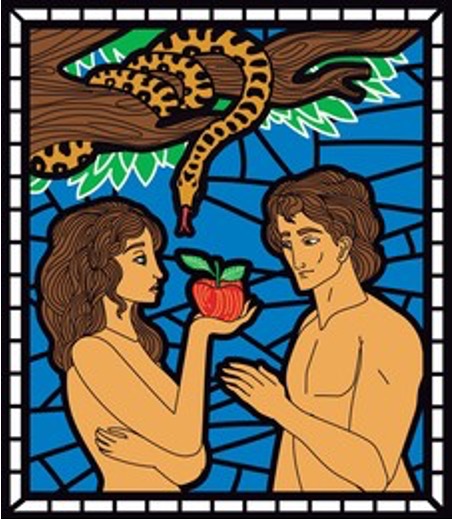
So much of the Old Testament – the Hebrew Scriptures – is filled with stories that try to explain in theological terms why the world is the way it is. A clear example of this is in the book of Genesis. The creation stories portray God as a good God who was pleased with his creation. At the end of each day, God “saw that it was good”. Why then does a woman bear such pain in giving birth to a child? Why does a man have to work hard in the heat of the sun to raise food for his family? Why then do sickness and death happen even to good people? Why is there genocide, inequality, and abuse? The story of Adam and Eve in the Garden gives us an answer. The world was a paradise, and God had only one commandment for Adam and Eve – “Do not eat the fruit from the tree in the middle of the garden. You may eat the fruit of all the other trees.” Of course, we know what happens! Eve and Adam both eat the forbidden fruit, and, because of their disobedience, God expels them from the Garden and life now becomes burdensome and painful. St. Augustine would call this the “original sin” which we all inherit simply by being born. We now have a propensity to sin, a built-in urge to do bad things and to disobey God’s commandments. Original sin affects individuals by bringing dissatisfaction and guilt into their lives. We will never be happy “until we rest in Thee”. (St. Augustine). But the grace of Christ gives us the power to overcome and minimize the consequences of original sin. Prayer and sacraments are the antidote to despair. Paradise is back within our reach! – – – Fr. Jim

© 2026 The Yellow Wood

Theme by Anders Noren — Up ↑