Meditations on Faith in a World Observed

Month: July 2026

The six precepts of the Church

The Church gives us a positive way to set ourselves apart as Catholic Christians. These are called the precepts of the Church. These are the minimum things that we do to call ourselves “Catholic Christians”. These six precepts are not difficult. You shall 1.) attend Mass on Sundays and on holy days of obligation and rest from strenuous labor. 2.) confess your sins at least once a year. 3.) receive the sacrament of the Eucharist at least once each year. 4.) observe the days of fasting and abstinence established by the Church. 5.) help to provide for the financial needs of the Church. 6.) observe the marriage laws of the Church. In these hot, slow days of summer, let us examine a few of these more closely. By going to Mass each week throughout the year we are celebrating the rhythm of the church year – the teachings and actions of Jesus, the important events in the lives of Jesus, Mary and the early disciples. In the process, we grow in our knowledge of the faith, in our knowledge about God and his Son Jesus. When we confess our sins once or twice each year, we make a good examination of conscience, and we become aware of the patterns that might be pushing us away from God. By having your marriage blessed in the Church you begin living in a state of grace which flows ever more deeply into your home life – with your children and with your spouse. And you will be able, most importantly, to receive Christ in the Eucharist. Let’s begin again with the intention of following these six precepts, that we may be good Catholic Christians. They are not difficult. But they will make a big difference in your walk with Christ. – – – Fr. Jim

A few meditations on American freedom

Two hundred and fifty years ago, a new and grand experiment began in the form of American democracy. The philosophy behind this experiment was that “all men are created equal, that they are endowed by their Creator with certain unalienable rights, that among these are life, liberty and the pursuit of happiness.” The specific rights were spelled out 17 years later in the Bill of Rights, including the right to a free press, the freedom to practice one’s own religion, and the freedom of due process and a just trial when accused of a crime. The Founders of American democracy were all men of the Enlightenment who had already seen in Europe the dangers of an established religion. Catholic social teaching has always taught that human rights cannot be considered apart from human responsibilities. With every right there is a responsibility. For example, the right to own private property and accumulate wealth is circumscribed by our responsibility to the common good, the sum of goods that we all enjoy in common. These goods include accessible and affordable health care, an effective system of public safety and security, an unpolluted natural environment, and a flourishing economic system that allows for individual creativity and industriousness. Government has a limited role to play in protecting the common good, but private enterprises must also play a part. As Jesus said, “the poor will always be with you” (Mark 14:7). The proper exercise of freedom will not result in perfect economic equality, but it should result in equal economic opportunity for all, with no discrimination against group of individuals. As Pope John XXIII once wrote in Mater et Magistra: “The economic prosperity of any people is to be assessed not so much from the sum total of goods and wealth possessed as from the distribution of goods according to the norms of justice.” Happy Freedom Day! – – – Fr. Jim

Understanding the Four Gospels

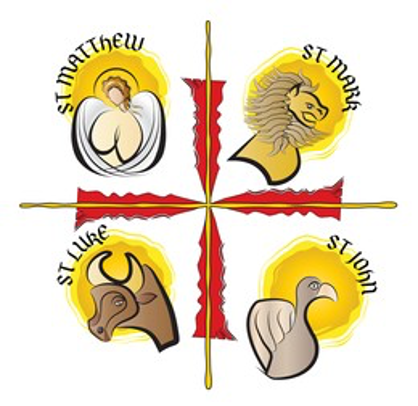
We should first remember that there were no scribes who were recording or transcribing the words of Jesus when he preached and taught. Even after his resurrection his first disciples saw no need for writing down his words since they thought he would come again in their lifetime. Thus, the first gospel written was the Gospel of Mark, written about 40 years after the death of Jesus. By this time, the stories about Jesus had been passed on orally from one generation to another. Mark is the shortest and most action-packed Gospel – the narrative moves rapidly to the cross. The Gospel ends at Mark 16:8, with the women fleeing in fear from the empty tomb. The authors of Matthew and Luke had Mark as one source and another source called “Q”, from the German “Quelle” (source). Matthew is writing to Jewish followers and presents Jesus as the new Moses. The Gospel of Luke highlights Jesus’ humanity and compassion, emphasizing that salvation is available to everyone, regardless of background. Only Luke and Matthew contain the Sermon on the Mount and the Lord’s Prayer, two essential teachings of Jesus. Matthew, Mark, and Luke are called “synoptic” because they are so similar to each other and repeat many of the same stories. John’s Gospel came decades later and emphasizes what the church believed about the divine nature of Jesus. But in every case the Gospel writer chose to retell stories and teachings in his own unique style so as to emphasize one aspect over another. Only Luke’s Gospel includes the parables of the Prodigal Son and the Good Samaritan. Only John’s Gospel tells of the raising of Lazarus. When we read all four gospels we get a more complete picture of Jesus. And we also get a better understanding of the early church. – – – Fr. Jim

Wisdom from Saint Augustine

Pope Leo XIV is an Augustinian priest. He often quotes from the wisdom of St. Augustine when he gives homilies or talks. Here are some of the bits of wisdom from this great saint. For Augustine, you cannot be a follower of Christ without being part of the Church. For Christ is the Head of the Church. It is an illusion to think you can “go your own way” apart from the Body. God is “nearer to us than we are to ourselves”. But our hearts will remain restless until they finally rest in God. On old age, Augustine says that the elderly are the first witnesses of hope. In his commentary of Psalm 71 he writes “God says, ‘Let your strength fail, so that my strength may abide within you. Then you can say with the Apostle Paul ‘for when I am weak, then I am strong.’” One of the saddest days of his life was in the port city of Ostia Antica on the Mediterranean coast of Italy. Augustine had been baptized and now he planned to return to his homeland in north Africa with his mother and his son. But as he was waiting for his ship, Monica passed away at the age of 56. She was his closest companion and inspiration. Augustine wrote that when someone dies it is very human to cry and to feel the pain. But we do not mourn as the pagans do, for our hope is in Jesus Christ who died on the cross and rose again. By the way, Jalen Brunson, star point guard for the New York Knicks, played college basketball at Villanova University, an Augustinian college. Maybe there are some secret powers embedded in this saint’s wisdom? St. Augustine, pray for us.  – Fr. Jim

What does the Church teach about immigration?

The Catholic Church’s teaching on immigration has its roots in Scripture and tradition. Both the Hebrew and Christian Scriptures reiterate the moral obligation to “welcome the stranger.” Jesus said that whatever we do to the foreigner living among us, we do to him (Matt. 25). First, the Church teaches that every person’s fundamental rights are not contingent on any law or national association but are based on their nature as children of God, created in God’s image. The under-nourished 4-yr old from Honduras has the same dignity before God as the wealthy lawyer on Wall Street. Second, all people have the right to migrate to sustain their lives and the lives of their families. This right is connected with the Church’s teachings on the dignity of work as laid out by Pope Leo XIII. Third, the Church teaches that a nation does have the right to establish laws around immigration and control its borders though these rights are always secondary to the dignity of the person. Every nation has a moral obligation to welcome the stranger whenever possible, to provide for their basic needs, and to treat all refugees and immigrants in a humane and dignified fashion. Fourth, deportation is listed (along with abortion, slavery, prostitution, and others) as one of the societal vices that “does more harm to those who practice them than those who suffer from the injury. Moreover, they are a supreme dishonor to the Creator.” (Gaudium et Spes 27) Finally, immigrants “are obliged to respect with gratitude the material and spiritual heritage of the country that receives them, to obey its laws, and to assist in carrying civic burdens” (CCC 2241). The Church does not make public policy. But it does provide the moral underpinnings for a balanced policy to be made. – – – Fr. Jim

Love of neighbor in need

While a graduate student at Clemson University, I was the student advisor for the Engineers Without Borders club – a group of students who wanted to use their skills to do humanitarian work in developing countries. We traveled each year to El Salvador and worked with local technicians to do the surveying, design, and installation of a water system for local communities near the Pacific coast. The students stayed in groups of two in the homes of families that also provided a hearty breakfast for us each day before work. One year we visited the convent church where Archbishop Oscar Romero was assassinated while celebrating Mass. As we sat in that little church, a Salvadoran nun explained to us all about the civil war between peasants and landowners and about the faithful courage of Msgr. Romero. At the end of our trip, we also met with a Jesuit priest. The students told him how they felt like their trip was not worth much because the local technicians knew much more about water systems than they did. The priest assured them that the gift they were bringing was their solidarity. “You have chosen to spend your spring break here, instead of many other things you could do. The people know that, and they are so appreciative.” The Catholic principle of solidarity is the moral principle that we are all one human family, calling us to practice global love, interdependence, and a firm commitment to the common good. One year we also helped release baby turtles whose eggs had been protected by a local conservancy. The turtles instinctively knew to march towards the ocean where they would mature and then return to lay their eggs once again in this very same spot. We, too, have an inner compass that leads us towards love of God and solidarity with our neighbor. – Fr. Jim

From the many, one

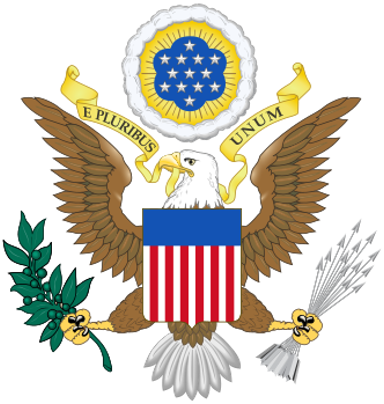
My sister, Marcia, was invited to read a story about St. Patrick on his feast day to a first-grade class earlier this year. At the end of the story, she talked about how part of her ancestry was from Ireland. Then she asked the children “Where are you from?”. A few responded “Mexico” or “Vietnam” or other places. But some of the students simply said “I am American.” So true! Regardless of where we are from originally, now we are all American and we share in its rich history and values. The official seal of the United States contains its motto: “E pluribus unum”. This is a Latin phrase that means “From the many, one.” There is good reason for this motto. The United States is formed by a union of 50 individual states, from California to Maine to Florida, each with its own unique geography and history and personality. The states come together in the halls of Congress to determine how best to spend federal taxes, to discuss how best to defend our nation against unjust aggression, and to pass laws that affect everyone. But the motto also refers to the fact that our nation has always been largely composed of immigrants from many nations, including Italy, Ireland, Mexico, Germany, Cuba, India, and many others. These peoples brought their own music, cultures and religion. The United States is a Great Experiment that tries to form one people out of these many nationalities while acknowledging their many freedoms. These freedoms include freedoms of speech, of assembly, and of religion. Democracy is a modern invention that was unfamiliar to Jesus. But he would have approved of any structure that encourages welcoming the stranger (Mt. 25) and love of one’s neighbor, especially the neighbor who is different (Mt. 5) – – – Fr. Jim

© 2026 The Yellow Wood

Theme by Anders Noren — Up ↑