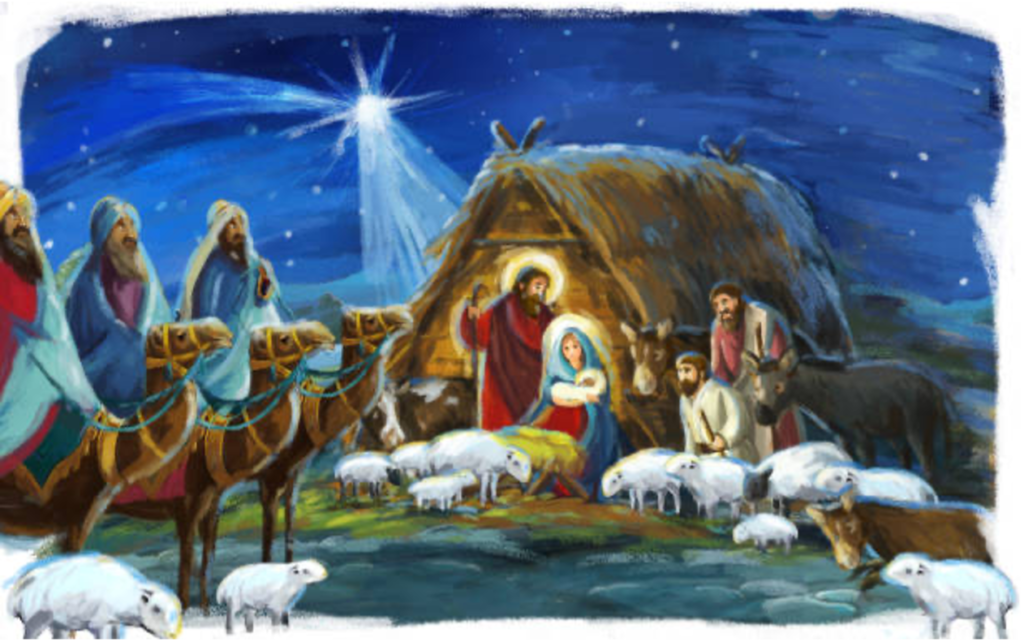
St. Thomas Aquinas, a Doctor of the Church, wrote that the four typical human substitutes for God are wealth, pleasure, power, and honor. Sensing an emptiness within ourselves, we attempt to fill it up with some combination of these four things. But it is only by emptying ourselves of these trivial desires that we can make space for God to fill us. The Incarnation is God’s self-emptying into a human person, a poor Galilean. The stable on Christmas night is a vivid reminder that the Savior came to us in a reversal of these substitutes. Jesus was not born in a fancy inn (wealth) but in a poor stable, surrounded by hay and damp wood and farm animals. Jesus, Joseph, and his mother, Mary, were not well fed (pleasure) and were probably hungry, since they were travelers away from home. A baby is the most powerless of creatures (power) and depends totally on adults for his care and well-being. And, finally, three wise men – wealthy and honorable – came to kneel down, offer gifts, and give honor to the child crying in a manger (honor). This same reversal will be emphasized even more dramatically on the cross. If we are to follow Jesus, we must pay attention to the things that we try to substitute for God in our lives. Are we addicted to something that gives us instant pleasure or gratification? Are we too proud to say “I’m sorry” to someone that we have offended? Do we cling to our riches too tightly so that we might not share them with others? Do we value our external appearance more than our internal goodness? God looks into our hearts and sees our true intentions. Christmas is a celebration of a different way to find joy! – – – Fr. Jim
Thanks for the wonderful Christmas reflection, giving examples for St Thomas’ teaching on how we can easily replace God with four empty promises.