Meditations on Faith in a World Observed

Author: admin (Page 6 of 7)

Diligent observers of nature

On Monday, April 8, millions of Americans were watching the sky as darkness fell over the earth during the total eclipse of the sun. But then we went back to our daily chores inside homes and businesses and office buildings. Not so, the medieval monks of Europe. The rural countryside of England, Ireland and western Europe were dotted with monasteries which became the centers of Catholic Christianity. These Benedictine monks took diligent notes of their world, from battles of war to the deaths of kings and popes to cats visiting their garden! But they also kept meticulous records about natural events all around them – the timing of early buds in the spring, the dates of the first frost each year, and the darkening and shape of the moon. In the book of Revelation, the end of times is described as when “… the full moon became like blood …” (Rev. 6:12-14). Therefore, the monks paid particular attention to the color of the moon. Scientists today have studied these journals from the 12th and 13th centuries and compared them to ice core and tree ring data. From these records they believe that there were many volcanic eruptions that introduced ash particles into the Earth’s atmosphere blocking out the sun’s solar radiation. These ashes contributed to a Little Ice Age in which temperatures were colder than normal. Rivers and canals were frozen over, glaciers expanded into farmlands, and famine was more common in areas with shorter growing seasons.  The violinmaker Antonio Stradivari produced his instruments during the Little Ice Age. The colder climate may have caused the wood that was used in his violins to be denser than in warmer periods and to contribute to the exquisite tone of his instruments. In the words of St. Paul, God has “fixed the ordered seasons and the boundaries of their regions, so that people might seek him…though indeed he is not far from any one of us.” (Acts 17). – – – Fr. Jim

Loving our teenagers out of the jungle

A tropical jungle has beautiful birds and monkey calls and exotic fruits and flowers. But it also has biting insects and poisonous snakes. The modern Internet and social media is like a jungle. It offers rich connections with friends as well as shared experiences like cooking and dancing and gardening. But it can also be distracting and even dangerous as any user is allowed to post petty grievances or lies and half-truths. Our teenagers are already going through natural life transitions, emotional mood swings and formation of identity. They have also had to endure a Covid lockdown and the threat (or reality) of losing a loved one to the virus. First, as adults, we need to assure them that we want to work together to leave a better world for them. Second, we also need to teach them good usage of social media and the Internet. Psychologists wisely recommend that young people get a smart phone only at high school age. Before that they can be given a flip phone to use in emergencies. Parents should also be active participants in what their children are doing and watching. We should model “no-device quiet times” as a family, such as 30 minutes before bedtime. This is a time that we can pray together, or play a game, or put together a puzzle, or watch a favorite TV show. Third, we offer them, over and over again, a plan and structure for living their lives in joy – the Gospel teachings of Jesus. The Ten Commandments lead to love of God and neighbor as we would be loved. Then we learn to love even those who are unlike us by welcoming the stranger among us. As parents, you are still the most influential persons in a teenager’s life. You and I can lead them out of the jungle and into greener pastures. – – – Fr. Jim

He loved them, even to the end

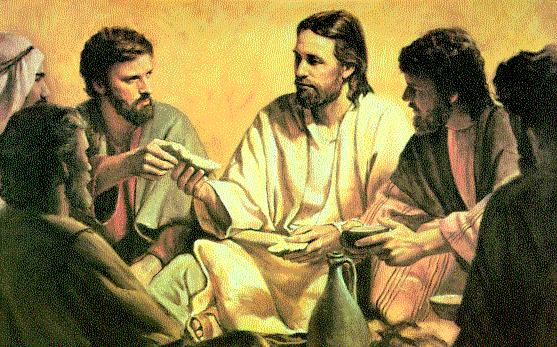
Biblical scholars like to point out that the details of the Last Supper in the Gospel of John are very different from those found in the other Gospels. John has no explicit institution of the Eucharist, with Jesus’ words “This is my body; this is my blood.” But this Last Supper is nonetheless very sacramental! John describes first the washing of the feet and then the sharing of the morsel of bread with Judas. Each of these actions has a sacramental overtone or sub-theme. Baptism into discipleship of Jesus is a sub-theme of the washing of the feet of Peter and the other disciples. “If I, your master and teacher, have washed your feet, you ought to wash one another’s feet.” (John 13:14). Eucharist is a sub-theme of the sharing of the morsel with Judas.  Within the context of a meal, Jesus shared a morsel with the most despised character in the Passion narrative – Judas. (An early manuscript of the Gospel included the words of Jesus to Judas: “Take and eat”. But perhaps a later editor found this to be scandalous and left it out of his copy.) Both Peter and Judas would betray Jesus. Yet Jesus chose them, out of all the other disciples, to partake in these sacramental actions. Thus goes the mercy and compassion of Jesus. Both then and now, the disciples of Jesus will inevitably disappoint him, misunderstand him, and deny him. Some may even betray him by claiming to be Christian but by acting out of hatred or fear, contrary to the person of Jesus. But Jesus’ love is never-failing even for these disciples. Perhaps this is what it means to say that Jesus “loved them to the end”.  He loves us, too, even now, to the end. – – – Fr. Jim

A funny thing happened on the way to the promised land . . .

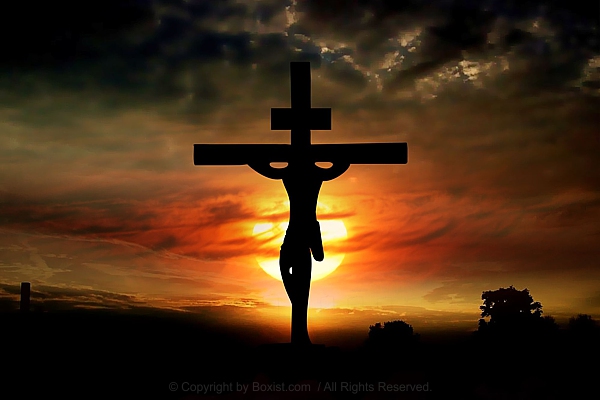
We must look closely at the things that are hurting us. Moses led the people of Israel for 40 years through the wilderness. At one point in the journey they encountered a group of poisonous snakes. Many people were bitten, and some died. The people pleaded with Moses – “Ask God to help us!” And so God said to Moses, “Mount upon a staff a bronze serpent. Set this up so that all can see it. When someone gets bitten by a serpent, let them gaze upon the bronze serpent and they will live.” The serpent on a pole is the image of medicine that is still used today. God’s desire was for the people to look directly upon the thing that was killing them. Then, under God’s watchful eye, they would be healed. Similarly we need to look at both the consequences of our sin and at the temptations that cause us to sin. What are the effects of my sin? Evil is anything which kills the spirit.  There are essential attributes of life that we all need – acceptance, affirmation, and the freedom to be unique.  Sin is often the desire to control others—to discourage their capacity to think for themselves, to diminish their uniqueness. It is possible to kill the spirit without actually destroying the body. Thus we may “break” a horse, or our spouse, or even a child without harming a hair on its head. And goodness is its opposite.  Goodness is that which promotes life, liveliness, and individuality. We also must give light to the things that lead us to sin so that we might “avoid the near occasion of sin”. If you are prone to anger, you must be aware of what causes your blood to boil. If you are vulnerable to pornography, you must avoid anything that might lead you there. If your weakness is alcohol, you must avoid even the first sip. By doing these things, we avoid the poison of our own sinfulness.  But now Jesus himself will be mounted upon a pole. The crucifix will be a reminder of the sin of all the world. It will be a reminder of the long-term consequences – the poison – of our sin and that of the whole world. It will be a reminder that we must first gaze upon our own sin in order to be healed. – – – Fr. Jim

Catholics march to a different drummer

A strong democracy needs two healthy political parties in order to avoid totalitarianism. Though some American Catholics tend to favor one political party over another, Catholics are neither Democrat nor Republican. Catholics are guided by the Gospel rather than one political party platform. More precisely, Catholics choose how they vote based on principles found in Catholic social teaching which is, in simple terms, the Gospel applied to modern challenges. The role of government (Federal, state, and local) is “to defend and promote the common good of civil society, its citizens, and intermediate bodies” (CCC 1910). Thus, the government collects taxes and revenue from all peoples in order to provide services for all people – e.g., roads and bridges, recreational parks, public education, affordable health care, national defense, worker safety, clean water to drink and air to breathe, a stable economy in which to conduct business, and many others. When we decide our vote, we look for evidence of respect for human life in all stages, care for our common earth, and the welfare of our most vulnerable citizens, including children, elderly, and the poor. Pope Benedict XVI called this “social charity”. In addition, we look for opportunities for decent work at living wages, opportunities for legal status for immigrant workers, and for work towards an end to all forms of discrimination and human trafficking. We realize that there are various ways to achieve these ends. Some are proposed by Republican lawmakers and some by Democratic lawmakers. The questions we ask of any public policy is “How will this promote human flourishing and serve the common good?”, regardless of who or which party proposed the policy. By separating ourselves as political independents, we can force the parties to amend their platforms to match the Gospel priorities as they seek the Catholic vote. – – – Fr. Jim

Better questions to ask

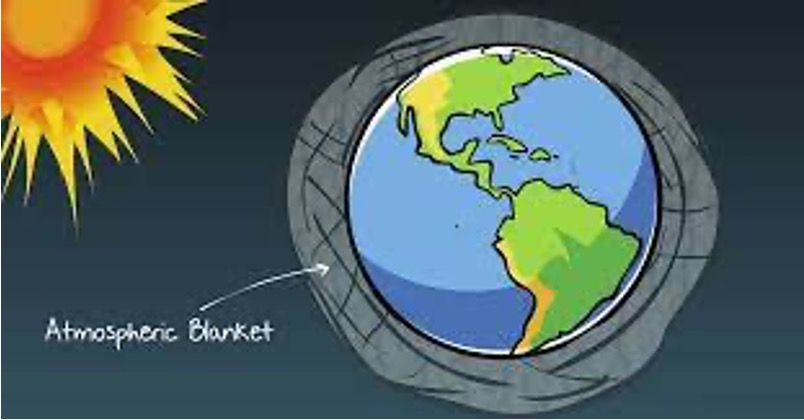
We will know that we have encountered God’s Word when we begin asking different questions. Instead of “what is best for me?” we begin to ask “how best do I love my neighbor?”. As the climate warms each year, we are confronted with a dilemma. Two-thirds of our electricity in Texas still comes from burning fossil fuels – coal and natural gas. And so, when we power on our air conditioning units, we are adding more CO2 and methane to the atmosphere which is adding to the heat blanket that is already overheating us. The hotter it is, the more we run the AC, the hotter it gets. It is a vicious cycle!  As the concentration of these gases continues to rise, so will the number of days over 100 degrees, affecting the occurrences of droughts, flooding, wildfires, and heat deaths. During his papacy, St John Paul II called us to “ecological conversion” – an understanding that many actions that we take affect the wellbeing of others, both now and in the future. The Catechism of the Catholic Church speaks of care for the earth under the Seventh Commandment: “Thou shalt not steal.” When we abuse our earth we are “stealing” from the wellbeing of future generations – our children, grandchildren and great-grandchildren who will inherit the earth that we leave them. The technology is now available to convert to cleaner forms of energy. Arizona, for example, now provides solar power to one million homes. This is free electricity from the sun that does not harm the atmosphere. Are we willing to make small sacrifices in order to leave a cooler earth for our grandchildren? That is a better question to ask. – – – Fr. Jim

Warmth in a late winter day

It felt more like spring, this fresh, warm day in late February. I went out for my usual Saturday morning run. But this day my heart was heavy because the night before I received a text from a former parishioner of mine. Her text read “Please help me. My baby is so sick.” Her 16-yr old daughter, Mia, had been diagnosed with a rare form of bone cancer and was on her second round of chemotherapy. Her body was now burdened with tumors on her hips and legs, and the doctors were trying hard to stay ahead of the cancer. But it seemed like they were losing the battle. Mia was a straight-A student, an obedient daughter who played on the softball team. There was no reason that she should have to suffer like this. I prayed with Mia over the phone, but I too felt helpless to do much more. On my run I stopped several times to listen to the birds singing and to feel the gentle breeze and the warmth of the sun on my face. Oh, what a beautiful morning! It felt like resurrection, and yet Mia was still carrying her cross, mocked and tortured by the cruel disease. Frederick Buechner, Presbyterian minister, once wrote that “Resurrection means that the worst thing is never the last thing.” The worst thing is painful, horrible, and unfair. But it is not the last thing. The last thing is springtime. I suppose God could have created the world with a single season and a single day. But creation is marked by its cycles – darkness to light, night to day, and winter to spring. This is how we know that the suffering will one day end. And how we know that new life is sure to follow. – – – Fr. Jim

God has set before you fire and water

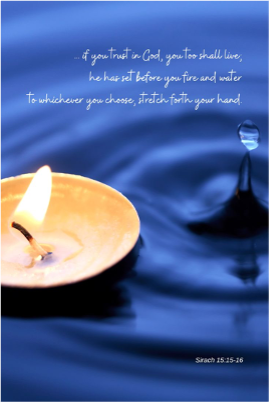
Would you rather put your hand in a fire or in a bucket of water? Life is full of choices! Some choices are small, like deciding what to wear today or what to cook for dinner tonight. But other choices are decisions between doing what is right and what is wrong. These are “moral choices”, and God created us to be free to make moral choices. It is this moral freedom that separates us from other animals. Moral decisions involve facing some sort of temptation. For example, a temptation to be dishonest to your spouse about something serious. Or a temptation to continue drinking alcohol when I know that I have reached my safe limit. Or a temptation to spread a vicious rumor about someone which may not be true. God takes these decisions VERY seriously! We read in Sirach 15: “If you choose, you can keep the commandments. There have been set before you fire and water. To whatever you choose, stretch out your hand. Before everyone are life and death, whichever they choose will be given them.” Fire is an element of nature that burns, consumes and destroys. Water, on the other hand, is life-giving. We cannot live more than 3 days without water, and our bodies are about 60% water. The commandments of God are given to us to lead us to abundant life. If we have a good conscience, then when we consider a bad decision we will begin to feel a tiny burn in our heart. Something is wrong and we feel it deep inside. A good conscience is formed by prayer, listening to God’s Word, and considering the potential effects of any decision, especially the long-term consequences. We are choosing between life and death. – – – Fr. Jim

Lady Justice and the common good

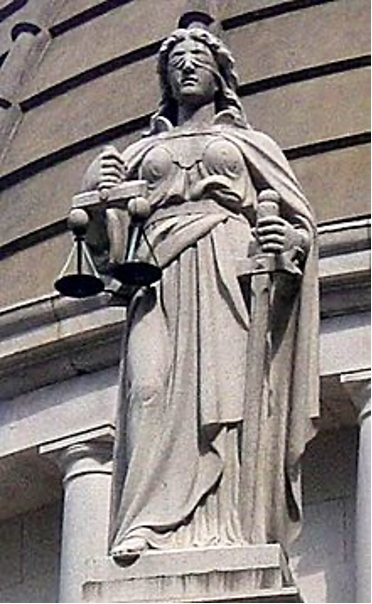
Outside of many courthouses you will see a statue of Lady Justice. She holds a set of scales in one hand and is, curiously, blindfolded. The scales represent her desire to address the imbalances and inequities of society. But what is meant by the blindfold? The blindfold shows that true justice treats everyone equally and impartially under the law. The notion of justice is enshrined in our Declaration of Independence: “that all men are created equal, that they are endowed by their Creator with certain undeniable rights.” Each of us is made in the image and likeness of God, regardless of our gender, race, religion, or sexual orientation. “Justice” means that all of us have access to the common good, including enforcement of laws, protection of rights and property, and the provision of basic services necessary to live wholesome lives. Likewise, all of us are held to the same level of accountability, whether we are a poor custodian or a wealthy former president. The U.S. Department of Justice has made “hate crimes” a more serious offense because in these cases a crime was committed against someone not because of what they did but because of who they are. Such a crime is also a grave mortal sin. Justice does not mean everyone will share wealth equally. The scales are always slightly unbalanced because, as Jesus said, “the poor you will always have with you” (Mk 14:7). The pursuit of the common good means that those who are rich (in money or influence) must use their status for the benefit of the whole rather than to increase their riches even further. Pope St. John Paul II spoke of this as “solidarity”, the result of cooperation and sharing of resources. Carved into stone above the entrance to the U.S. Supreme Court building is “Equal justice under law.” Amen! – – – Fr. Jim

Forty days of becoming free

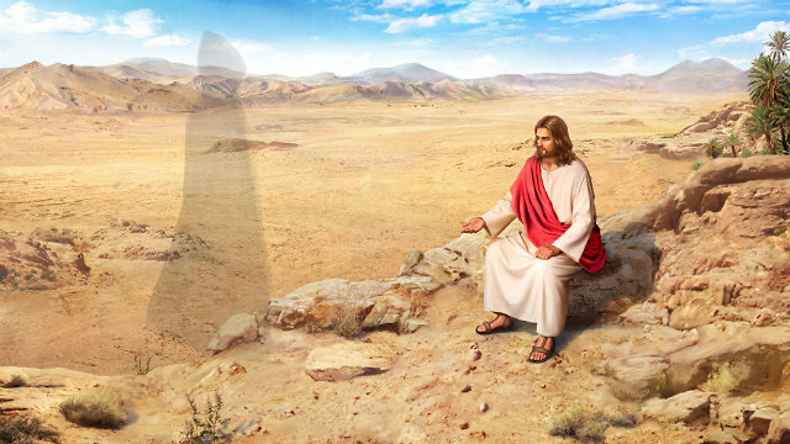
The Sunday liturgies in Lent always begin with Jesus’s sojourn in the wilderness. Notice that, in Mark’s Gospel, it is the Spirit that leads Jesus alone into the desert. Thus, this 40-day retreat is a good thing! In his humanity, Jesus will have to deal with all the same temptations that you and I deal with. In the Bible, the Devil’s purpose is always to order our desires away from God. And so, the Devil confronts Jesus with three temptations. The first one is to “make bodily pleasures the central focus of your life”. Like others, we Catholics enjoy the sensations of food, drink, sex, and other pleasures as good and God-given. But when the satisfaction of these things becomes primary, then we lose our focus on God. Jesus says in response: “We do not live by bread (pleasures) alone, but also by heavenly things”. We are not just animals. The second temptation is to be honored and esteemed. Everyone, even priests, have a desire to be loved and acknowledged. But this, too, can be sinful when it becomes our primary motive for our actions. The final temptation is for power. It might be easy to blame politicians and corporate executives to be guilty of seeking power and control. But don’t we also seek to manipulate others around us? Don’t we seek control over the various forces in our lives? The process of dying is to finally realize that control is merely an illusion. In Lent, we must take special notice of these same temptations in our lives. Do we give too much importance to our satisfaction of bodily pleasures? Do we seek affirmation beyond what is sufficient? Do we pretend to exercise complete control in our lives? Only when we let go of these things can we become truly free to do God’s work in the world. – – – Fr. Jim

« Older posts Newer posts »

© 2026 The Yellow Wood

Theme by Anders Noren — Up ↑