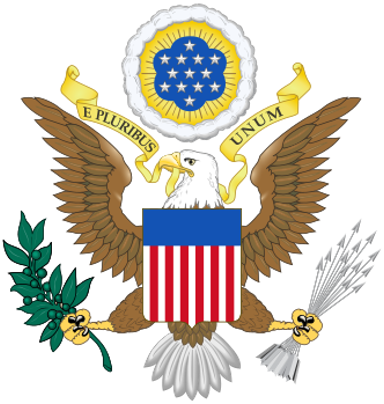
My sister, Marcia, was invited to read a story about St. Patrick on his feast day to a first-grade class earlier this year. At the end of the story, she talked about how part of her ancestry was from Ireland. Then she asked the children “Where are you from?”. A few responded “Mexico” or “Vietnam” or other places. But some of the students simply said “I am American.” So true! Regardless of where we are from originally, now we are all American and we share in its rich history and values. The official seal of the United States contains its motto: “E pluribus unum”. This is a Latin phrase that means “From the many, one.” There is good reason for this motto. The United States is formed by a union of 50 individual states, from California to Maine to Florida, each with its own unique geography and history and personality. The states come together in the halls of Congress to determine how best to spend federal taxes, to discuss how best to defend our nation against unjust aggression, and to pass laws that affect everyone. But the motto also refers to the fact that our nation has always been largely composed of immigrants from many nations, including Italy, Ireland, Mexico, Germany, Cuba, India, and many others. These peoples brought their own music, cultures and religion. The United States is a Great Experiment that tries to form one people out of these many nationalities while acknowledging their many freedoms. These freedoms include freedoms of speech, of assembly, and of religion. Democracy is a modern invention that was unfamiliar to Jesus. But he would have approved of any structure that encourages welcoming the stranger (Mt. 25) and love of one’s neighbor, especially the neighbor who is different (Mt. 5) – – – Fr. Jim
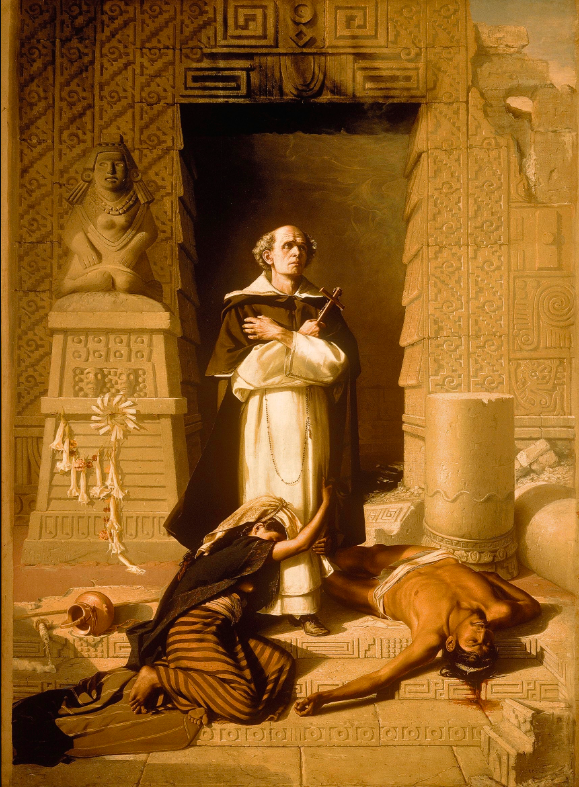
Bartolome de las Casas was born in Seville, Spain, in the 15th century. At the age of 18, he traveled to the Dominican Republic, 10 years after the voyages of Christopher Columbus. What he saw was appalling! In their desire for gold and other riches, the Spanish conquistadores were working the native Indians to death and enslaving them in inhuman conditions, using their Christianity as a justification. He saw three native men tied together and slowly strangled to death “in honor of Christ, our Redeemer.” After being ordained a Dominican priest back in Spain, Fr. Bartolome returned to the New World to work with his Dominican friars on an encomienda, a large Spanish farming estate. On the Fourth Sunday of Advent 1511, he heard one of his friars give a powerful homily chastising the Spanish for their immoral treatment of Indians. For the rest of his life, Bartolome preached and fought for the human dignity of these enslaved peoples. A common philosophy was that certain groups of people, due to their lack of intelligence and moral integrity, were destined to be ruled. And that only by accepting Christ could they be saved from eternal damnation. Fr. De las Casas relied on his Dominican predecessor, St. Thomas Aquinas, to refute this view. Even pagan societies, in the measure that they lived by just laws, were implicitly in line with Christian civilization. Bartolome pointed out how the native peoples were skilled in architecture, painting, needlework, and song. Using Christ as an example, he pointed out that true evangelization only takes place in a peaceful context. Christ converted men and women through his words, ideas and good example, not through the sword. Further, Christ summoned his apostles to preach only to those who were willing to receive his message of God’s love. – – – Fr. Jim
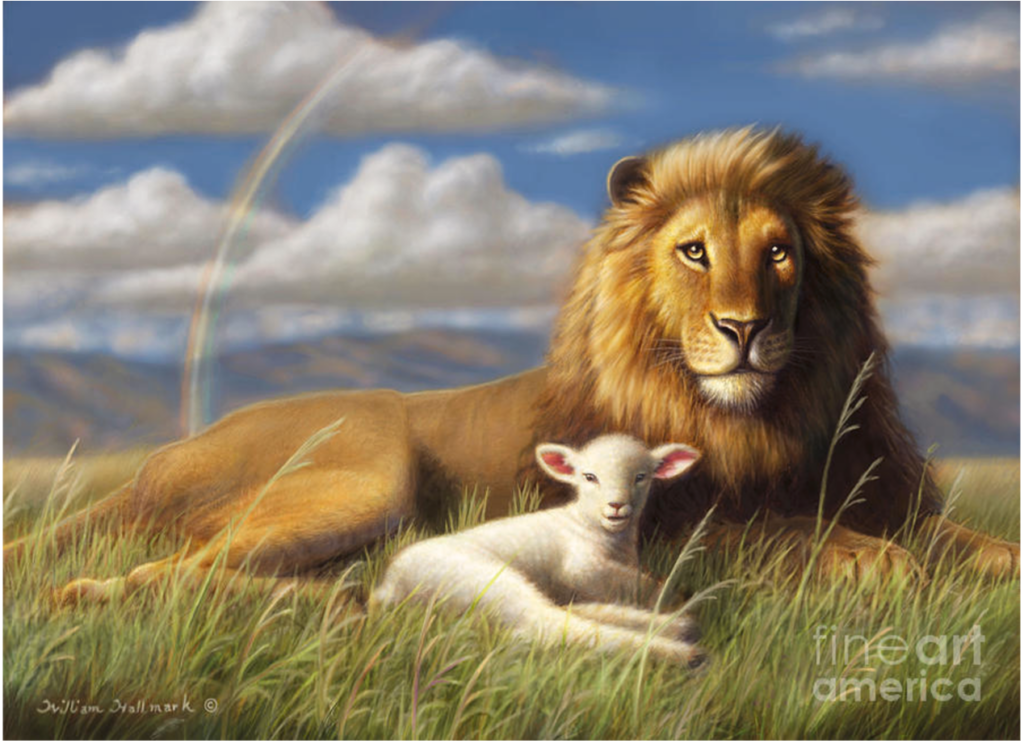
When I was young I had a friend whose name was Barry. He was a very good basketball player. He could make long shots into the basket from anywhere on the court. I asked him “How are you such a good shooter?” He said that he sits alone and plays make believe. He imagines himself shooting the ball and it goes in the basket. He pretends, and every time he pretends, the ball goes in the basket.I decided to play make believe also. I dreamed about myself playing the guitar, that I could play difficult songs with great skill. I also daydreamed about being a good priest. When we daydream about something good, we can make it start to happen. God wants us to imagine good things. When we pray the rosary, we imagine Mary as our mother. She holds us in her arms. She comforts us when we are afraid. When we gaze into the manger scene, we imagine a scene of much peace. The cattle are making soft noises. The baby is sleeping. The angels are singing about “Peace on earth, goodwill towards all men.” In the book of Isaiah, God asks us to imagine something very strange (Isaiah 11:1-10). If you put a lion and a lamb in the same cage, what do you think would happen? The lion would eat the lamb. He would make lamb chops to eat! But God wants us to imagine a world in which people live peacefully with one another. When we imagine something like that, we can make it start to happen. We can begin to live as if it were true. And – you know what? It will then start to become true. – Fr. Jim
Jean Piaget was the great developmental psychologist from Switzerland. He proposed that consciousness grows and develops through a series of stages. Older children do not just think more quickly than younger children. Instead, there are both qualitative and quantitative differences between them. Based on observations of his daughter and her cousin, he concluded that children were not less intelligent than adults—they simply think differently. The idea was revolutionary at the time. Albert Einstein called Piaget’s discovery “so simple only a genius could have thought of it.”
A baby sees himself as one with his mother. There is no separation. But in the next few years, she begins to understand what is the same and what is different. She learns about the world through basic actions such as sucking, grasping, looking, and listening. She realizes that she is a separate being from the people and objects around her. She learns to pick out one shape that doesn’t look like the others. She is naturally egocentric and is not able to see things from the perspective of others. But by about the age of seven, the child should begin to grasp and understand general rules. This is the stage of “pre-adolescence”. People in this stage can be very tribal and possessive in nature. These are “my” toys; you have no right to them. Revenge is “an eye for an eye, and a tooth for a tooth.” Unfortunately, some people never leave this stage. As adults, the toys are now things that are more serious in nature. My country is the greatest – right or wrong. My political party is the greatest – right of wrong. My religion is the only religion – right or wrong. But other people move beyond this stage to a more unitive consciousness. The prophets of Israel, Mohandas Gandhi, Martin Luther King, Jr. – and Jesus – are examples of such persons.
Our task as Christians is to put on the mind of Christ. How do we do that? Jesus gave us many clues when he spoke of the Kingdom of God. The Kingdom of God is not some place we go when we die. Jesus said “The Kingdom of God is within you, and the Kingdom of God is at hand.”, which means the kingdom is now and attainable. It happens now whenever we put on the mind of Christ. It happens when we try to understand someone who is different from us. It happens now when we forgive over and over and over again. It happens now when we love the one labeled as our enemy. When Jesus told the story of the Good Samaritan, he was inviting his followers to a unitive consciousness in which labels and tribes no longer matter. When he told the story of Lazarus and the rich man, Jesus was inviting his followers to transcend the ego, the “pre-adolescence”, and to see the common humanity between the economic classes.
A story might better illustrate this concept.
A man was on death row for a murder. But a few months before his execution, he suffered heart failure and trouble breathing. He was sent to a hospital and a team of doctors spend several days trying to cure him. One of the young doctors kept asking, “Why are we going to such trouble? He is going to die in a few months anyway.” But as they kept working with him, they learned about his life. His mother left when he was young and his father was abusive. He took care of his younger brother, even changing his diapers when he was a baby. The man was very proud of his younger brother who became a good man.He said to the doctors: “No one remembers the good things that I have done. They only remember the worst thing.” In the process of being cared for by the medical team, the man felt loved for the first time in his life.And, in turn, the doctors learned of the depth of the human story, that everyone has some goodness in him. Everyone is made in God’s image. The man was executed three months later.But in a few days at the end of his life he felt the goodness of God’s love through a team of doctors. In the letter to Timothy, we are invited to “pursue righteousness, devotion, faith, love, patience, and gentleness…. Lay hold of eternal life, to which we were called.” (1 Tim. 6:11-12) We can lay hold of eternal life now, by putting on the mind of Christ. – – – Fr. Jim
When did creation happen? In the late 17th century, using only the Bible and his current knowledge of history, an Archbishop in Ireland estimated that the act of creation happened about 4000 years before the birth of Jesus or, more precisely, on October 22, 4004 BC. But long before the word “science” was even coined, good people were closely studying nature as a pathway to learning about God. For, as it was said, God reveals Himself to us in the two books of Scripture and Nature. A Scottish physician, James Hutton, could see on his farm that natural processes, such as erosion, occur very slowly, on the order of millions of years. Charles Lyell, a gentleman farmer and lawyer, studied the layers of rock outcrop in his native England. He saw remains of organisms embedded in the various layers, suggesting that these life forms lived many, many years ago. We now know that the earth was formed about 4.6 billion years ago, but it was extremely hot and not at all livable. The early atmosphere was rich in volcanic gases like carbon dioxide and lacked free oxygen until about 3.6 billion years ago. Very slowly, life began to take shape, starting in the ocean depths. In the Cambrian era, there was an “explosion” of life when primordial life forms moved up onto dry land and developed skeletons and hard body parts. A great extinction of most species (including the dinosaurs) occurred about 65 million years ago. We human beings came along much later, and if all of creation could be shown in one year, then we humans would appear on December 31 at very close to midnight. We slowly developed language and culture and conscious awareness of our life world. Maybe God is much bigger than we ever dreamed! – – – Fr. Jim
St. Pope John Paul II wrote: “Faith and reason are like two wings on which the human spirit rises to the contemplation of truth.” In other words, God gave us intelligence to uncover truths – through scientific discovery – about the natural world. He also gave us the capacity to believe in things that are beyond our visible world, to have faith in the unseen Maker. Some say that science and religion are incompatible. But God is truth, and truth will never contradict truth. A person uses reason when she asks a lot of questions; she uses faith when she trusts in someone or something. The happiest people are those who both trust and use logical reason. For example, we trust a road map because someone has already traveled the routes before us and measured all the distances. We trust an older sister who is a stockbroker and recommends that we invest in a certain stock. We know that she wouldn’t intentionally deceive us. We can’t possibly know all about a person before we marry them. But we pay close attention to their moods, habits, likes and dislikes, and we have ruled out any reasons why we should not marry this person. Then we trust, and hope, that our choice is a good one. (If we waited until we knew everything about a person, then no one would ever get married!) The same holds true with our life with God. We have known experiences of beauty, goodness, and truth, when we have felt lifted up beyond ourselves into the Transcendent. Or we know and learn of other people’s experiences of such. These personal experiences are real and can be trusted. The first letter of Peter says: “Always be ready to give … a reason for your hope, but do it with gentleness and reverence.” (1 Pet. 3:15) – – – Fr. Jim
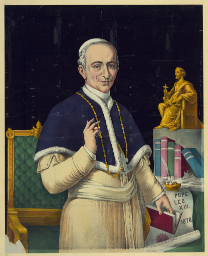
The first century world was quite different from our modern world. Jesus never had to teach his followers about church-state relations, or artificial birth control, or child labor, or environmental degradation because such things just did not exist. Catholic social teaching is the collection of teachings from the Pope and our bishops that apply Gospel principles to these modern problems. And it all began with Pope Leo XIII who published his encyclical letter, Rerum Novarum (Of a New World), in 1891. This pope lived at the height of the industrial age in Europe and the Americas. The working class was enduring the misery of long hours, unsafe working conditions, low wages, and forced child labor. One response was that taken by Karl Marx who advocated the overthrow of the ruling class and private property. In contrast, Pope Leo’s approach was more measured and respectful of human dignity and individual freedom. Against socialism, Leo affirmed the right to private property as an incentive for individual initiative and creativity. He asserted the right to a living wage rather than a contract that is imposed upon the workforce in order to generate greater profits for the owner: “Wages ought to be sufficient to support a frugal and well-behaved wage-earner.” And he affirmed the right of workers to form unions so as to better negotiate with owners over more favorable working conditions. The pope cautioned against the excesses of capitalism which can lead to a gap between economic classes. A new pope chooses his name out of respect or admiration for a previous pope and to signal the desire to follow in his footsteps. Perhaps the newly elected Pope Leo XIV, too, wants to address a new world, or, perhaps, this old world in a new way. – – – Fr. Jim
Every pastor of a Catholic parish brings his own unique set of skills and interests to the position. He will have his own perspective and priorities. The same holds true for the pastor of the global Catholic Church, the Bishop of Rome. Pope Francis was a pastor who encouraged Church ministers to “take on the smell of the sheep”. As Archbishop of Buenos Aires, he would visit the country’s villas miserias, not in a fancy car, but by bus. He would kiss the feet of the people, earning him the nickname the “priest of the slums”. Surely this practice opened his eyes to the eyes of the poorest and most vulnerable. He didn’t change church tradition, but sometimes made it more merciful. He reminded us that being Christian means being counter-cultural. Instead of bullying, we seek understanding and offer compassion, just like our Heavenly Father. As Pope, he was too liberal for the conservatives and too conservative for the liberals. In this sense then, he was like Our Lord Jesus, who came not to subvert the religious law but to give it a heart of compassion and mercy. He spoke of “building bridges rather than walls” and he followed his words with actions. He challenged us to share God’s blessings upon those who felt left out of the church, including gay couples and couples who were not married properly within the church. In his writings, he reminded us that we are called to care for God’s creation for the sake of the poor and for future generations. And he believed sharing the Gospel meant sharing joy, the joy that the disciples felt upon receiving the Holy Spirit at Pentecost. Well done, good and faithful servant. – – – Fr. Jim
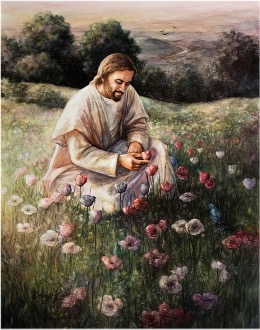
On Holy Saturday of this year, 11 men and women were confirmed and anointed at our parish with Sacred Chrism, blessed by the bishop. In the Anointing of the Sick, the priest follows the instructions of the Apostle James to anoint the sick “with oil in the name of the Lord.” (James 5:14-15), uniting the person to Christ’s Passion and offering strength in their suffering. The chrism for Confirmation and the oil for Anointing are examples of a sacramental. We celebrate seven Sacraments (capital “S”), which are events in which we encounter God is a deeper way. But there are many sacramentals (little “s”) that are sacred signs or symbols that extend the sacraments and point us to God’s graces. Candles remind us that Christ is the light that freely enters into the darkness of the world’s sin. Bells are a reminder of the heavenly choirs that ring out their glory in praise to God. Statues are visible reminders of the saints who have gone before us, showing us how to follow the Lord in their own particular circumstances. Incense is a reminder that our prayers rise up towards God as a fragrant offering of our hearts. And most importantly, holy water radiates the sacrament of our Baptism. Indeed, anything in God’s creation can become a sacramental if used in the proper way. Jesus said “Consider the lilies of the field.” Let them reveal God’s graces to you. This past week our nation celebrated Earth Day. By doing so, we consider the importance of protecting the planet and its natural resources. As people of faith, we feel called to care for God’s creation as his stewards. And as Catholics, we can also see all parts of creation as sacramentals. Stately trees, colorful flowers, and puffy clouds – all of these are invitations to fall in love again with our world….and its Creator. – – – Fr. Jim
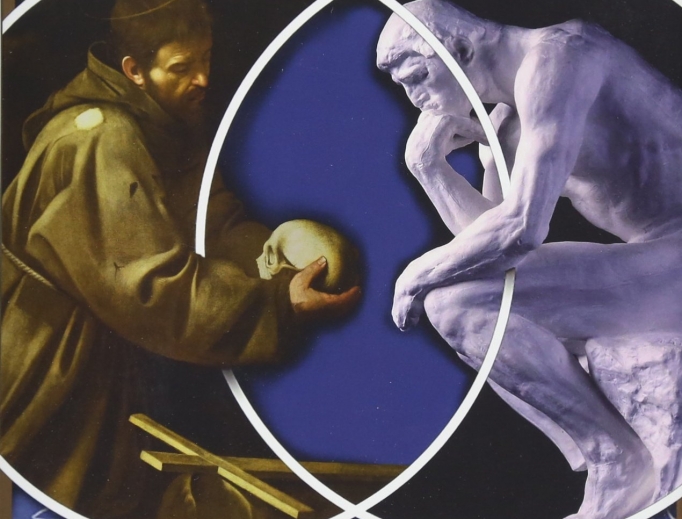
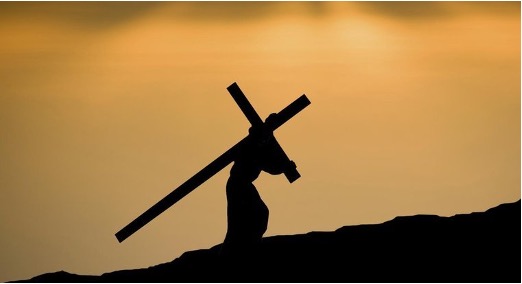
When Jesus called his disciples, he said to them “Follow me”. He never asked for admirers or worshippers. He was asking for followers. An admirer is someone who sees the beauty of the teacher but keeps his distance. Jesus wants followers who will walk with him, every step of the way, including through his passion and death. Thomas a Kempis wrote: “There will always be many who love Christ’s heavenly kingdom, but few who will bear his cross.” Each of us has, or will have, a cross to bear. But the Christian must not only accept suffering; he must make it holy. Merely accepted, suffering does nothing for our souls. We might even become bitter. Endurance alone is not enough. We make our suffering holy but giving meaning to it. If our cross is living with someone who hates us or makes our life difficult, we bless that person by praying for them. If our cross is caring for a sick or elderly loved one, then we are pouring our love out for them as Christ poured out his blood on his cross. If our cross is our own illness, then we unite our cross to Jesus in prayer for the healing of the world’s sin. We become intimate participants in the redemption of sin by the cross of Jesus. Whatever our cross, it always serves to jolt us out of our complacency. It allows God to destroy something within us that needs to be destroyed – our pride, our comfort, the illusion of permanence. There are only two ways to grow in Christian maturity – through prayer and through suffering. We choose to pray; but the suffering happens to us. But we then choose to make it holy, uniting it with the suffering of Christ. – – – Fr. Jim