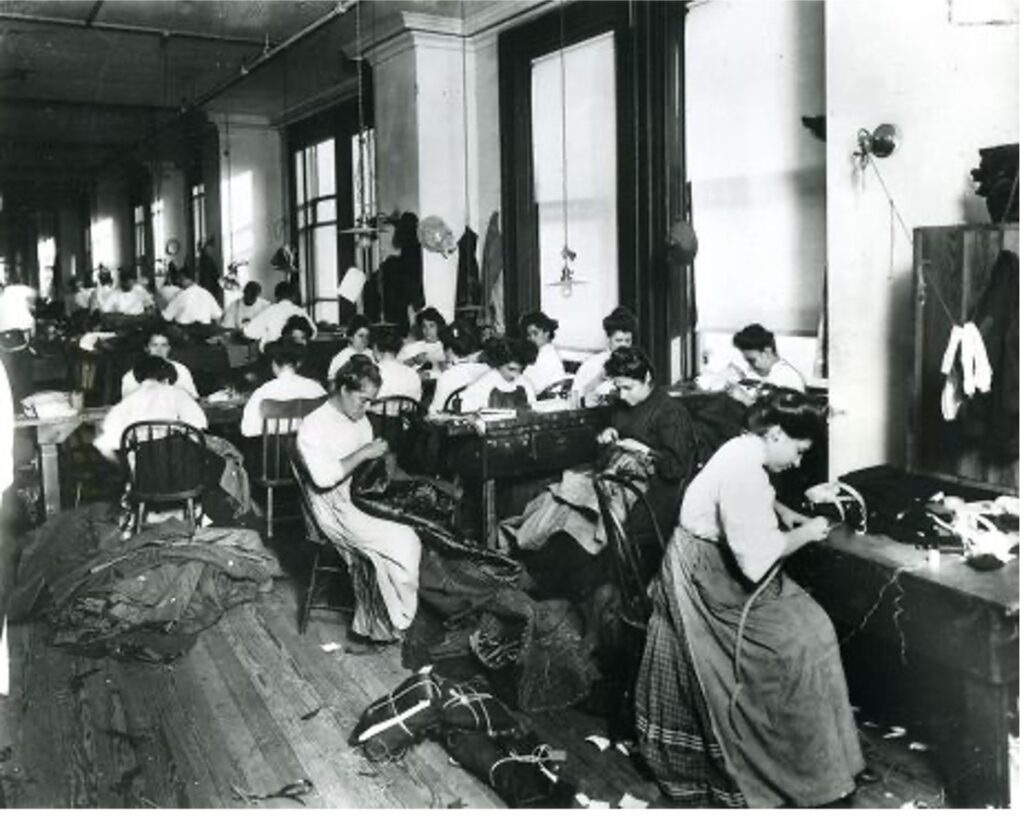
A “sweatshop” is any workplace in a very poor work environment, including low wages, excessively long hours, and unsanitary or dangerous working conditions. On one trip to Cambodia, I watched hundreds of women and children enter a garment factory, a sweatshop, early in the morning. But sweatshops were also common in the US in the early 20th century. The Triangle Shirtwaist Factory in New York City employed mostly women and girls to sew a blouse that was in high demand. Many of these girls were from Italian families escaping conditions of hunger. Or they were from Jewish families, escaping persecution in Russia or Ukraine. The daughters knew they needed to work in order to pay for rent and food for the family. After all, economic security was the American dream. On Saturday, March 25, 1911, a fire in the factory killed 123 women and girls as well as 23 men who died from the fire, smoke inhalation, or from jumping to their deaths from the 8th, 9th, and 10th-story windows. The doors of the factory had been locked by their supervisors from the outside to prevent workers from taking unauthorized breaks. There was no place to go but out the windows. The two youngest girls were 14 years old. One of the witnesses to this tragedy was Frances Perkins, who quit her job in order to make sure that these workers did not die in vain. Through her efforts, fire safety measures were put in place and the work week was limited to 54 hours a week. Many years later, St. Pope John Paul II wrote an encyclical on human work, Laborem Exercens, in which he argues that workers have a right to proper wages, appropriate rest, safe working conditions, and the right to organize. These are all measures of human dignity and respect for life. – – – Fr. Jim
Leave a Reply