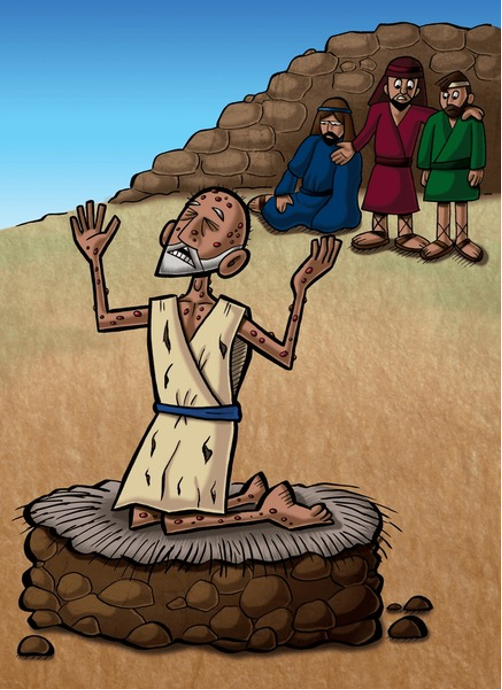
The Old Testament book of Job is a poetic classic that is often taught in college literature classes. The book deals with the deepest of human issues – Why do bad things happen to good people? How do we let go of old ways of thinking? How do we remain faithful to God amidst immense emotional and physical suffering? Job is a good man who undergoes a series of losses – first, all his cattle and means of livelihood, then his beloved children, and finally his own health as he suffers severe boils from the soles of his feet to the top of his head. Through it all, Job refused to curse God. “We accept good things from the Lord; and should we not also accept evil?” But he does curse the day of his own birth. “Perish the day when I was born…May that day be darkness.” In other words, may that day never have existed. According to Israel’s conventional wisdom, a good man will prosper. He will be blessed by God in this life and in the next. One should never have to choose between obedience and suffering. But the story of Job turns this wisdom upside down. It easy to give comfort to someone who is sick when we are healthy. It easy to give comfort to someone who has just lost a child when we have healthy children. Job gives voice to the suffering person. He says the things that a sorrowful person wants to say but can’t find the words. That is the beauty of this book. Other books of wisdom – Proverbs, Ecclesiastes – may be reflections of a man with a full stomach writing from his study. But Job is an attempt to deal with life’s most existential questions from the vantage point of a man’s tears and pain. God only appears at the end of the book. He speaks to Job out of a storm – “Where were you when I founded the earth? …Who laid its cornerstone while the morning stars sang together?” We should not come to the book of Job looking for answers. We should come looking for companionship; someone with whom we can commiserate when our life too seems unbearable. – – – Fr. Jim
Leave a Reply