Meditations on Faith in a World Observed

Category: Uncategorized (Page 3 of 7)

We begin with ashes . . .

I was working as a Catholic chaplain at Children’s Medical Center in Dallas, and one of my first patients was a teenager, about 18 years old. He was dying of leukemia, and his body was thin and frail. But as I spoke to his family and saw the photos around his room, I realized that he had once been a strong, healthy football player for the high school team. His journey was quicker than ours, but all of us will make that same journey, from ashes to ashes, from dust to dust. Our bodies are only the fragile vessels into which God has poured the spirit of Juan or Maria or Mike or Jimmy. If I could, I would mark not only our foreheads with ashes, but also our entire face, our hands and our feet.  And I would ask you to do the same to me. But if cancer causes death to the body, sin causes death to the spirit. When the beautiful Tamar had been deceived and humiliated by her half-brother, Amnon, she put ashes on her head and tore her clothing (2 Sam. 13:19). Her grief was not for her personal sin but for the sin of the world and how that sin affected her. We begin the season of Lent with ashes because we begin with the harsh realities of life. There IS sin and brokenness in the world. There is our own sin, and the sin of others. We need a Savior to walk with us in this world of sin because it is too dreadful to do it alone. If we can begin at this place, in this state of dreadfulness, then our own small discipline of Lent will begin to have meaning, meaning that will lead us one day to the Resurrection. – – – Fr. Jim

Our evolving view of God

“The sands of the seashore, the drops of rain….who can number these? Heaven’s height, earth’s breadth ,,,, who can explore these?” (Sirach 1:2-3)

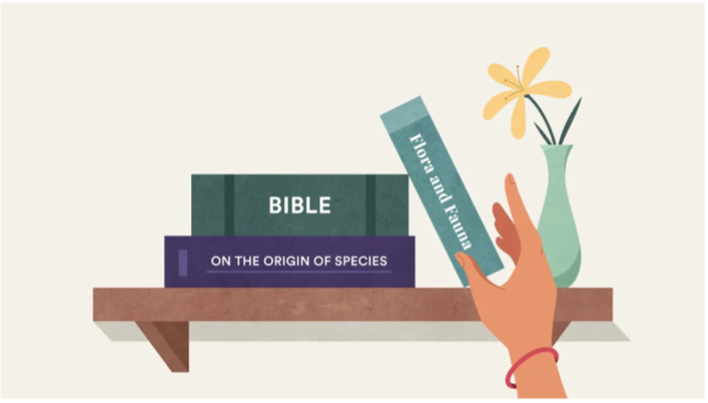
The immensity of God befuddles us. The people of Israel were a tribal culture, and their understanding of God was as a tribal God. So in the Old Testament, God is a creator, but he is also presented as a warrior who is sometimes primitive, angry, jealous, and unpredictable. He can even be a vengeful destroyer of innocent people (e.g., 1 Samuel 15:3; Judges 14:19). In a later time, the prophets Isaiah and Jeremiah understood God to be a shepherd, a comforter, and a defender of the poor. Jesus’s own experience of God was as one who desires to relieve the misery of the poor and freedom of the captives (Luke 4). He is a patient Father who welcomes the return of his wayward children. In the ancient worldview, good things that happened were a reward for goodness, and bad things were a divine punishment. Modern science has given us a view of creation that is still evolving and much older than the Biblical writers could have known. The universe is evolving towards greater complexity, consciousness, and self-transcendence. With this new information, our understanding of God must adapt. Human beings are still unique among creatures, but we are part of a much larger drama. Our future is intertwined with the earth’s future. The Bible says “Taste and see the goodness of the Lord.” (Psalm 34). In other words, God is not known through an intellectual argument but is experienced in life itself. We experience God whenever we are moved by beauty, goodness, or truth. God is still creating, and His creation is one of freedom, adventure, and mystery. And it is all “groaning” towards its final completion in Christ Jesus, the Omega point, the perfection of humanity. – – – Fr. Jim

The courage to love as Jesus would love

At a youth conference in early spring, one of the most popular sessions was entitled “Leading with Love: How do we accompany those with same-sex attraction?” The presenter, Fr. Daheim, works with an organization called Courage ministry. This apostolate includes Catholic men and women with same-sex attractions who live chaste lives in fellowship, truth and love. His session was so popular perhaps because many of our young people know gay boys or girls at school who struggle to be accepted on an equal basis with their peers. When a young person enters the teenage years, he/she begins to discover their sexual preference. It is not something they choose, but rather a natural inclination. Evolutionary biology observes that same-sex preference will always be a minority, ~4-6% of the overall population. This is because the species always tends towards self-propagation. The Biblical authors would have been unaware of these scientific truths. As Christians, we believe that each human being is made in God’s image. Therefore it makes no sense to treat anyone differently because of their sexual orientation, just as we don’t react differently to people with red hair, who are left-handed, or who have a birth defect. The Catechism says that people with homosexual tendencies “must be accepted with respect, compassion, and sensitivity. Every sign of unjust discrimination in their regard should be avoided.” (CCC 2358). These persons will, like all of us, be judged according to the same standards of self-giving love, faithfulness in their promises, and commitment to truth and sincerity. We should be relieved to know that God will be the Final Judge of all mankind, and that we only need to act with courage to love these brothers and sisters as Jesus Himself would love them. – – – Fr. Jim

The meaning of original sin

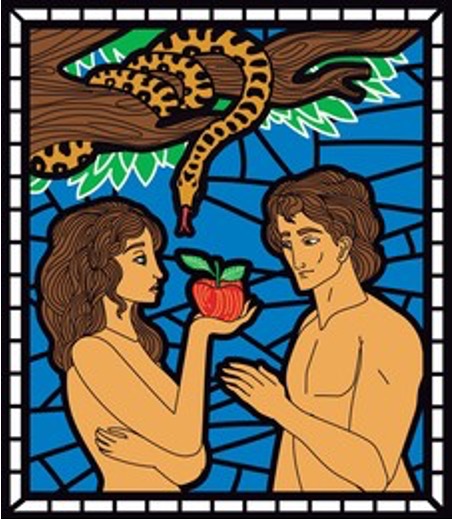
So much of the Old Testament – the Hebrew Scriptures – is filled with stories that try to explain in theological terms why the world is the way it is. A clear example of this is in the book of Genesis. The creation stories portray God as a good God who was pleased with his creation. At the end of each day, God “saw that it was good”. Why then does a woman bear such pain in giving birth to a child? Why does a man have to work hard in the heat of the sun to raise food for his family? Why then do sickness and death happen even to good people? Why is there genocide, inequality, and abuse? The story of Adam and Eve in the Garden gives us an answer. The world was a paradise, and God had only one commandment for Adam and Eve – “Do not eat the fruit from the tree in the middle of the garden. You may eat the fruit of all the other trees.” Of course, we know what happens! Eve and Adam both eat the forbidden fruit, and, because of their disobedience, God expels them from the Garden and life now becomes burdensome and painful. St. Augustine would call this the “original sin” which we all inherit simply by being born. We now have a propensity to sin, a built-in urge to do bad things and to disobey God’s commandments. Original sin affects individuals by bringing dissatisfaction and guilt into their lives. We will never be happy “until we rest in Thee”. (St. Augustine). But the grace of Christ gives us the power to overcome and minimize the consequences of original sin. Prayer and sacraments are the antidote to despair. Paradise is back within our reach! – – – Fr. Jim

The joy and peace in the light that awaits us

Other than the Risen Lord, no person has yet died and come back to life on this earth. But many people have had near death experiences (NDEs) in which they were very close to death and are able to talk about it. Dr. Peter Fenwick was a neuropsychiatrist who studied NDEs in hundreds of people. He found that 82 percent of the people he surveyed were less afraid of dying because of their near-death experiences. One man wrote to him: “I slowly floated down a tunnel, not afraid in any way but looking forward to a wonderful light. When it came I was absolutely at peace. No worries, problems or anything, just wonderful.”  Another woman wrote: “When I was 22, I went into shock from a severe allergic reaction to penicillin. I had an out-of-body experience. I was floating above my body in the emergency room, watching the physicians and staff trying to save me. It was the most peaceful I have ever felt. When I recounted the experience to my physician, he expressed disbelief until I told him how many were working on me, where he was standing, what they said and what they did to save me.” Hospice nurses have shared with me something that I have also seen. When they are near death, some people resist death as strongly as they can. The more they resist, the more chaotic their death. But others accept death gracefully. Perhaps they want to live long enough to say goodbye to all their grandchildren. Others will let go almost as soon as they receive the Last Rites from a priest. They have a sense that a loving God is waiting for them with open arms. But of course, we already knew that…. – — Fr. Jim

Wisdom from a modern-day prophet

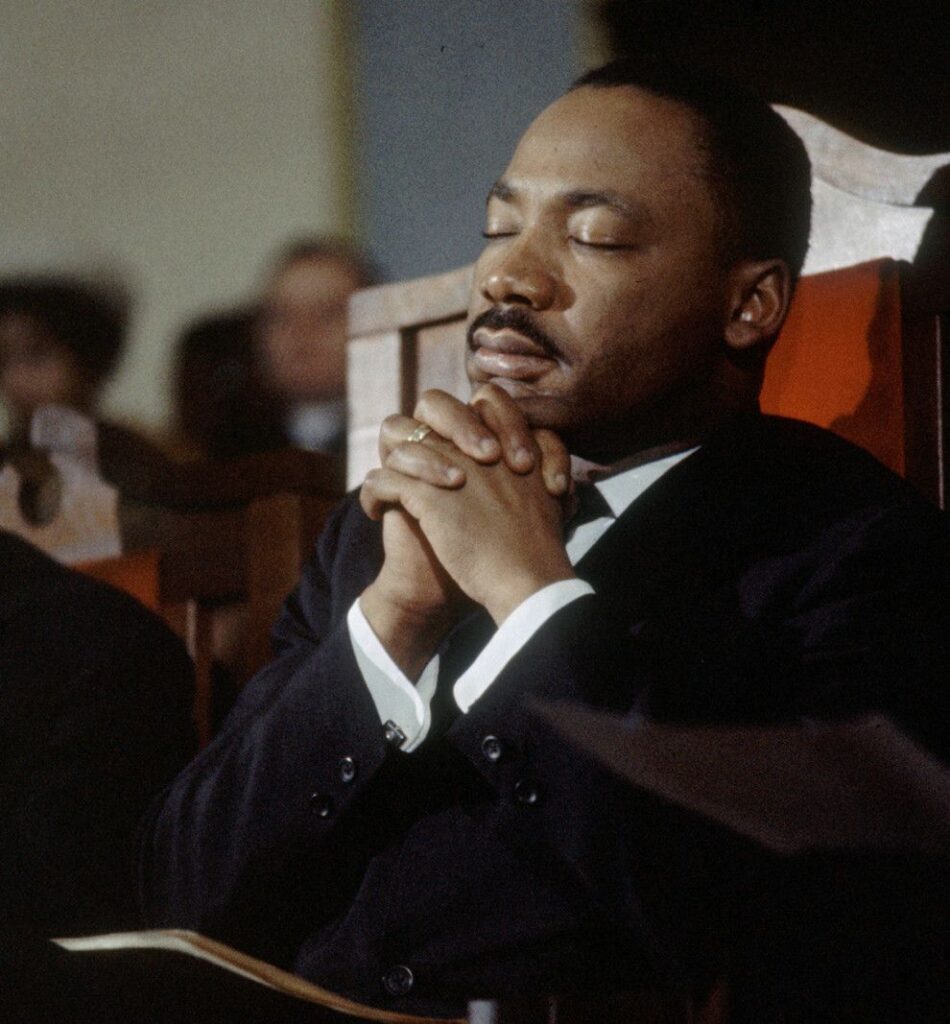
“Take the first step in faith. You don’t have to see the whole staircase, just take the first step.” These are the words of Martin Luther King, Jr, one of the greatest Christian believers in modern-day America. His dream of a just society for all Americans was reflected in both his actions and his words. His faith was in Jesus, the King of Love. He refused to use violence or destruction against white men who perpetrated violence against the Negro. He always advocated only non-violent, peaceful protests. “Darkness cannot drive out darkness: only light can do that. Hate cannot drive out hate: only love can do that.”  He spoke of unity among men and women: “We must learn to live together as brothers or perish together as fools”. Since 1948, more than 200 black churches and homes had been bombed in the South. Even after this and having witnessed torture and lynchings by mobs of vicious men, he spoke only of forgiveness: “Forgiveness is not an occasional act; it is a constant attitude … I have decided to stick with love. Hate is too great a burden to bear”. On June 11, 1963, President John F. Kennedy addressed the nation on television to urge Congress to pass comprehensive civil rights legislation and to address the ongoing struggle for racial equality in the United States. He said that any American, regardless of their skin color, should be able to eat lunch in a restaurant without intimidation, send his children to the best school available, and to vote for the public officials who will represent him. A prophet is someone who calls out our sin, but also gives us reason to hope. As MLK, Jr, once said: “We must accept finite disappointment, but never lose infinite hope”. – – – Fr. Jim

Learning to win and lose gracefully

There are many lessons we want to teach our children. One of the most important is how to deal gracefully with disappointment. On January 6, 2021, the losing candidate for the US presidency incited a riot against our nation’s Capital, nearly resulting in the death of his own vice president. Four years later, on January 6, 2025, the losing candidate certified the election results and gracefully handed over the office of the president to the new victor. As she put it, “the peaceful transfer of power is one of the most fundamental principles of American democracy. As much as any other principle, it is what distinguishes our system of government from monarchy or tyranny.” That is, there are bigger principles that transcend a single contest. Sports are a healthy way of teaching this lesson to our children. Great athletes know the discipline of getting up after a loss and again hitting the practice field and preparing for the next game. A single bad grade on an exam is sometimes the best incentive to study even harder and excel for the remainder of the course. The bigger principle, in these cases, is the joy of a game and the learning that comes in the classroom. Emotional maturity demands that we learn from our mistakes or our shortcomings and set about to correct them. Proverbs 14:25 says: “Souls are saved by truthful witness and betrayed by the spread of lies.” This proverb highlights the importance of integrity and truthfulness, even and especially in the face of defeat. A good “loser” would likely be honest about their mistakes and failures and, in turn, congratulate the “winner”. Let’s teach our children these lessons, starting at an early age, so that they may form good habits of winning and losing. – – – Fr. Jim

Becoming pilgrims of hope

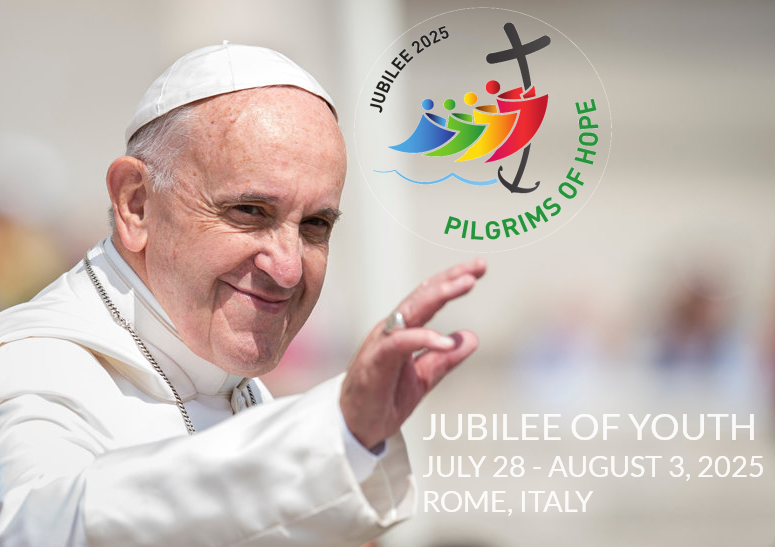
It has ben said that Pope St. John Paul II was a “witness to hope”. He often spoke of a “springtime of the Church” In which good would triumph over evil and truth would be victorious over lies. Hope, along with Faith and Love, is a theological virtue. Hope is trusting in God despite disappointment at the abundance of sin in our world. During one of his visits to the United Nations, Pope JP II said that “Hope is not empty optimism….but is the premise of responsible activity that is nurtured in the inner sanctuary of conscience where man is alone with God”. In other words, hope is nurtured in prayer and is expressed in positive action, action that provides a stark contrast to sin with unconditional love of our neighbor. For example, the hope-filled Christian doesn’t just despair at the rise of homelessness. He vows to take some small part in initiatives to alleviate the housing crisis. Other examples – in times of loneliness I can put my hope in hobbies and friendships. In times of a health scare, I can put my trust in God working through doctors and nurses. Do I see God’s providence as guiding the stars as well as the challenges and blessings of my personal life and that of my family? Pope Francis has declared the new year 2025 as a Jubilee Year of Hope. St. Paul reminds us that hope, like all virtues, is the result of practice and discipline, and “hope does not disappoint” (Rom 5:3-5). – – – Fr. Jim

The reversal of the Christmas stable

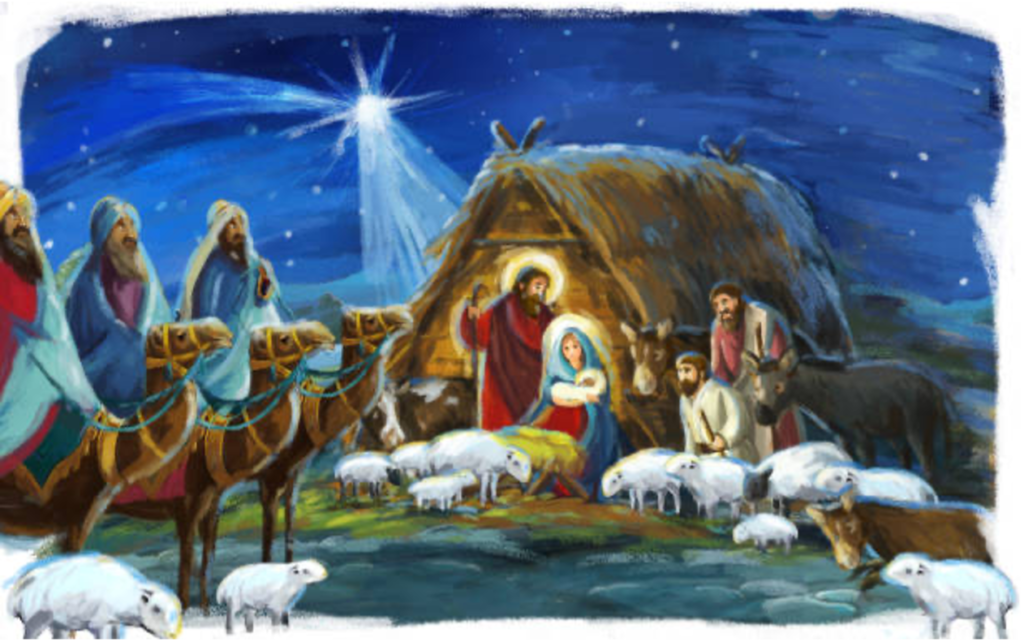
St. Thomas Aquinas, a Doctor of the Church, wrote that the four typical human substitutes for God are wealth, pleasure, power, and honor. Sensing an emptiness within ourselves, we attempt to fill it up with some combination of these four things. But it is only by emptying ourselves of these trivial desires that we can make space for God to fill us. The Incarnation is God’s self-emptying into a human person, a poor Galilean. The stable on Christmas night is a vivid reminder that the Savior came to us in a reversal of these substitutes. Jesus was not born in a fancy inn (wealth) but in a poor stable, surrounded by hay and damp wood and farm animals. Jesus, Joseph, and his mother, Mary, were not well fed (pleasure) and were probably hungry, since they were travelers away from home. A baby is the most powerless of creatures (power) and depends totally on adults for his care and well-being. And, finally, three wise men – wealthy and honorable – came to kneel down, offer gifts, and give honor to the child crying in a manger (honor).  This same reversal will be emphasized even more dramatically on the cross. If we are to follow Jesus, we must pay attention to the things that we try to substitute for God in our lives. Are we addicted to something that gives us instant pleasure or gratification? Are we too proud to say “I’m sorry” to someone that we have offended? Do we cling to our riches too tightly so that we might not share them with others? Do we value our external appearance more than our internal goodness? God looks into our hearts and sees our true intentions. Christmas is a celebration of a different way to find joy! – – – Fr. Jim

Becoming pilgrims of hope

It has been said that Pope St. John Paul II was a “witness to hope”. He often spoke of a “springtime of the Church” In which good would triumph over evil and truth would be victorious over lies. Hope, along with Faith and Love, is a theological virtue. Hope is trusting in God despite disappointment at the abundance of sin in our world. During one of his visits to the United Nations, Pope JP II said that “Hope is not empty optimism….but is the premise of responsible activity that is nurtured in the inner sanctuary of conscience where man is alone with God”. In other words, hope is nurtured in prayer and is expressed in positive action, action that provides a stark contrast to sin with unconditional love of our neighbor. For example, the hope-filled Christian doesn’t just despair at the rise of homelessness. He vows to take some small part in initiatives to alleviate the housing crisis. Other examples – in times of loneliness I can put my hope in hobbies and friendships. In times of a health scare, I can put my trust in God working through doctors and nurses. Do I see God’s providence as guiding the stars as well as the challenges and blessings of my personal life and that of my family? Pope Francis has declared the new year 2025 as a Jubilee Year of Hope. St. Paul reminds us that hope, like all virtues, is the result of practice and discipline, and “hope does not disappoint” (Rom 5:3-5). – – – Fr. Jim

« Older posts Newer posts »

© 2026 The Yellow Wood

Theme by Anders Noren — Up ↑