Meditations on Faith in a World Observed

Category: Uncategorized (Page 5 of 7)

The eye is the lamp of the body

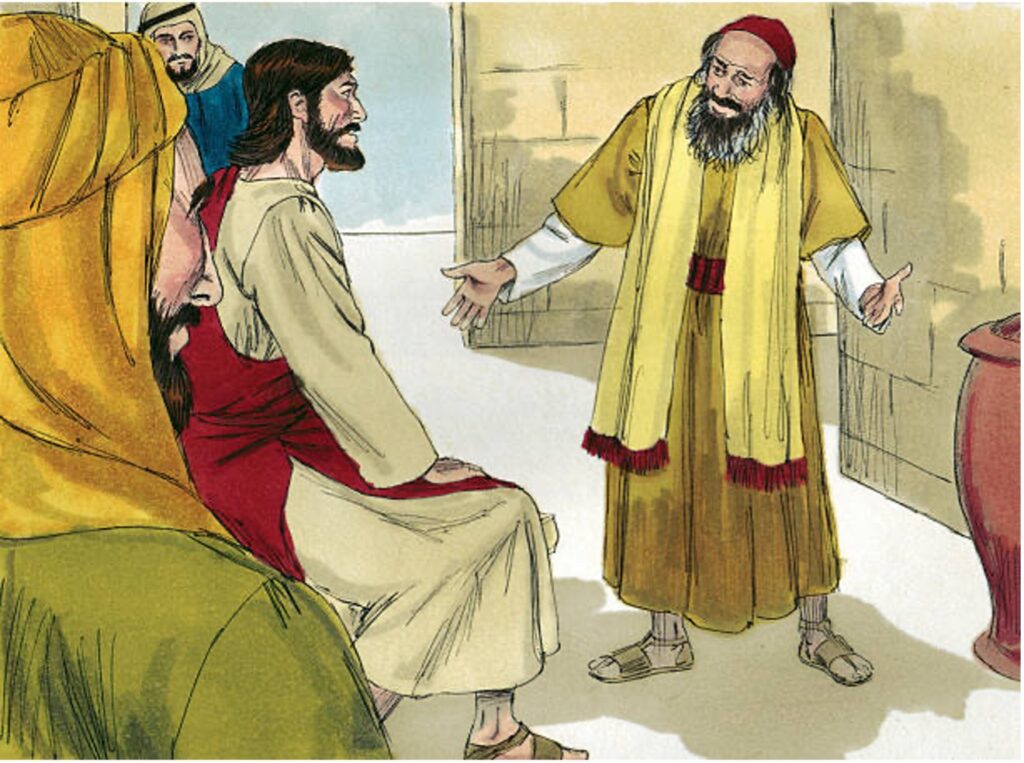
One day, while sitting on a hill overlooking the Sea of Galilee, Jesus said: “The eye is the lamp of the body. If your eye is sound, your whole body will be filled with light; but if your eye is bad, your whole body will be in darkness. And if the light in you is darkness, how great will the darkness be!” (Mt. 6:22-23). In our modern age, one of the biggest scourges is the sin of pornography. Both men and women can get addicted to these moving images that demean the dignity of human beings into that of animals. It teaches people to use others as “objects”–in this case, a means of selfish, lustful gratification. St. John Paul II once wrote that in the act of intimacy, husband and wife celebrate the mutual gift of self which they have made to each other in the marriage covenant. Anything less than this is an abuse of the gift. As I often tell the penitent in the Sacrament of Confession, pornography is like drinking rat poison. Even a little bit is not good for you. The images often remain with you to haunt you. Don’t let your eye let in what is bad and distorting. As Jesus warned, it will plunge your whole body into darkness. Instead, take up your favorite hobby, do a kind deed for someone you love, or go for a run / walk. If necessary, put porn blockers on your devices so that you are not tempted. The website of the US Catholic bishops (USCCB) has helpful links to resources for people caught in these traps. Search the site for “Help for Those Struggling with Pornography”. Don’t let the darkness be in you. Instead, let there be only light! – – – Fr. Jim

The blessings of good seeds planted

The Bible says: “Start children off on the way they should go, and even when they are old they will not turn from it.” (Proverbs 22:6). My dad studied foreign languages at the University of Iowa and then served in the Air Force as a translator during the Korean War. In our eyes as his children, he was truly filled with the joie de vivre. On his one day off each week (Wednesday), he would rise early and begin work on his many “projects” around the house. When I wasn’t in school, I would shadow him as he taught me how to use tools and to do easy maintenance on cars and lawnmowers, light carpentry and home repair. He had plenty of stress from his work at a large department store, but he channeled it into positive energy as a “man for others”. He would often have one beer in the evening to relax. (His beer of choice was Texas Pride at $1.99 per six pack – only slightly more stimulating than water.) Each summer he would take the entire family camping in which many nights we would all sleep together in a big canvas tent. Many fathers go fishing with their son. It’s less about catching fish, but more about spending time alone together, sometimes in silence as the boy gathers his thoughts and asks important questions. Jesus never had a plan for what the perfect society would look like.Instead, Jesus gave us a process, a way of listening, a way of emptying ourselves so that we might be filled by God’s spirit. He tells this parable about the seeds scattered on the land. The farmer is only involved in the sowing of the seed and in the final harvest. But the growth of the seed is God’s work. It is mysterious and not something caused by human effort. As I write this, today is Father’s Day. A father’s privilege is to be the sower of seeds in the lives of his children. He sows the seeds of self-confidence, of kindness, of gentleness, and of faith in God, the Father of Jesus. That’s all he has to do. God will do the rest of the work. Mostly by their actions, fathers shape how their children see the world. As kids mature into adults, they make their own choices about what to do with their lives, how to treat others, and how to understand their relationship to God. But their fathers have helped lay the foundation for those decisions. Thank you, Daddy, for all the big and little things. Happy Father’s Day! – — Fr. Jim

A shout out to the good people in the middle

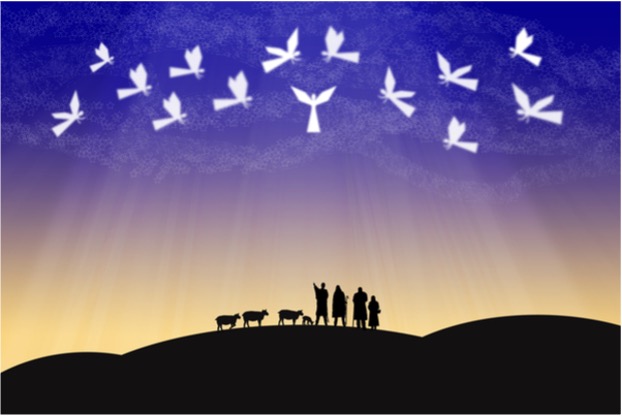
When saintly Pope John XXIII wrote his encyclical “Peace on Earth” he addressed it not only to Catholic Christians throughout the world, but also to “all people of good will”. I like this term because it speaks of people who are sincere, thoughtful, and are not beholden to a particular religious ideology or political platform. These are people who discern what is good using their own common sense and the inherent goodness in their hearts. Thus, it seems to me, People of Good Will believe that work is a part of our human dignity, and everyone should be encouraged to work for a living instead of just receiving handouts. People of Good Will would say that gender identity at birth is most appropriate. But boys with some feminine traits and girls with some masculine traits should be loved and respected for exactly who they are. People of Good Will believe that individual initiative and enterprise (a free market) should be encouraged, but that it must not damage the common pool of resources that we all share – clean water, air, and earth.  People of Good Will recognize a qualitative difference between an unborn fetus and a newborn baby. We do not reflect the image of God in our feet and fingers but in our awareness and our capacity to love in relationship with others. People of Good Will realize that a democracy can only function if election results are accepted by everyone, even those whose preferred candidate did not win.  People of Good Will recognize that ignorance leads to fearmongering, which leads to suspicion, and suspicion leads to hatred. And God is never found in hatred. Finally, People of Good Will know how to turn off all the noise around them and are in touch with the truth that is deep within their hearts. Besides, they are too busy caring for their children and working for a living. On the night of the Savior’s birth, the angels sang “Glory to God in the highest and on earth peace to people of good will.” The People of Good Will are the first to hear the Good News because they are not part of a tribe. These are the ones who seek and love the Truth, the only place where God is found. – – – – Fr. Jim

The wisdom of the scribe

Last year our St. Francis Medical Mission to Belize included two doctors, four dentists, a chiropractor, and a diabetes nurse. We also had two Lions Club members who did eye screenings and offered both prescription lenses and sunglasses, all collected in the U.S. Over the six days in clinic we saw and treated over 1000 people. But each case was sadder than the last. We treated a woman who was blind from diabetes along with her daughter who was deaf and mute, likely from a childhood disease left untreated. We helped a crippled man who had lived for 6 years with a spinal injury and simply wanted some relief from his suffering. Our dentists had to extract rotten teeth from children who had never seen a dentist. We ended each workday with dinner and Mass at the rustic retreat center where we stayed. It was then that we could reflect on the day in the light of the Scriptures. The Jewish scribes had knowledge of the law and could draft legal documents and contracts. One of them asked Jesus which was the greatest commandment. When Jesus responded with “love of God and love of neighbor”, the scribe affirmed his answer, but added something. He said to Jesus: “You are right in saying that God is One and there is no other … to love him with all your heart, your understanding, and all your strength, and to love your neighbor as yourself is worth more than all burnt offerings and sacrifices.” When Jesus heard this, he said “You are not far from the Kingdom of God.” (Mark 12:28-34) To love God by loving our neighbor is more important than all of our rituals and sacrifices. When I heard this passage, I knew that these missionaries too are not far from the Kingdom of God. – – – Fr. Jim

The people behind the numbers

One podcast that I enjoy is called “Marketplace” from NPR. It reviews the day’s economic numbers – e.g., inflation rate, jobless rate, consumer price index – as well as providing on-site interviews with small business owners, corporate managers, and everyday workers. It is a good reminder that the economy includes people with real needs and hopes and dreams. One of the oldest principles of the Judeo-Christian tradition is that the goods of the earth are destined for all, without exception or exclusion. The U.S. has a “mixed economy” in which both private and public institutions have roles to play.  Private businesses and competition create goods while providing work and encouraging innovation and personal initiative. But the right to private property is linked to a duty to provide for the needs of all. Thus, public institutions (government) exist to ensure that the basic needs of all its citizens are being met. In a free market, private businesses exist to make a profit while providing the best goods possible. But if allowed to run free without constraint, much damage can be done. For example, monopolies can form and drive up prices of goods to their benefit. The production of goods often produces water and air pollution which adversely affects all citizens. Businesses can also be discriminatory in hiring practices and can create wealth inequality by placing the profits in the pockets of a few at the top. The bottom line is that the common good is the proper domain of government. As Pope St. John Paul II wrote: “The market should be appropriately controlled by the State so as to guarantee that the basic needs of the whole of society are satisfied” and, especially, the needs of the most poor and vulnerable. Catholic social teaching on the economy doesn’t offer policy, but it gives general principles to be followed. It reminds us that, behind the numbers, there are real people. – – – Fr. Jim

The true vine and buds of hope

The Gospel of John is the last Gospel written and is very different from the first three gospels. The Gospel of John is most concerned with the identity of Jesus. Who is this man who has been raised from the dead? Like God the Father, Jesus is a mystery. And so the Gospel of John recounts several unique sayings of Jesus. These are called the “I am” sayings: “I am the Good Shepherd….I am the light of the world….I am the Bread of Life….I am the way, the truth and the life….I am the true Vine and you are the branches.” What does it mean to hear that we are the branches and Jesus is the vine? Easter is the season of Hope. Many people, even some Christians, believe that Hope is about the life after death. It is all about going to heaven, about getting away from this world. But that’s not the message of Jesus. The message of Jesus is about the Kingdom of God here on earth – in the here and now, in your life and in my life.  The prayer he taught us is “Thy kingdom come, and Thy will be done, On earth in the same way that it is in heaven.” In the mind of Jesus, following Him is a matter of cultivating heaven on earth, a place where we forgive one another, a place where we seek unity, not disunity, a place where we forgive and forget. God’s kingdom is a place where we let go of selfishness and grab onto responsibility for one another. It is a place where we ask different questions. We begin to ask “How can I leave the world a better place for my children and grandchildren?” . . . . These are the signposts of hope all around us. These are the buds on the true Vine of the Christ. – – – Fr. Jim

Why did God create Eve?

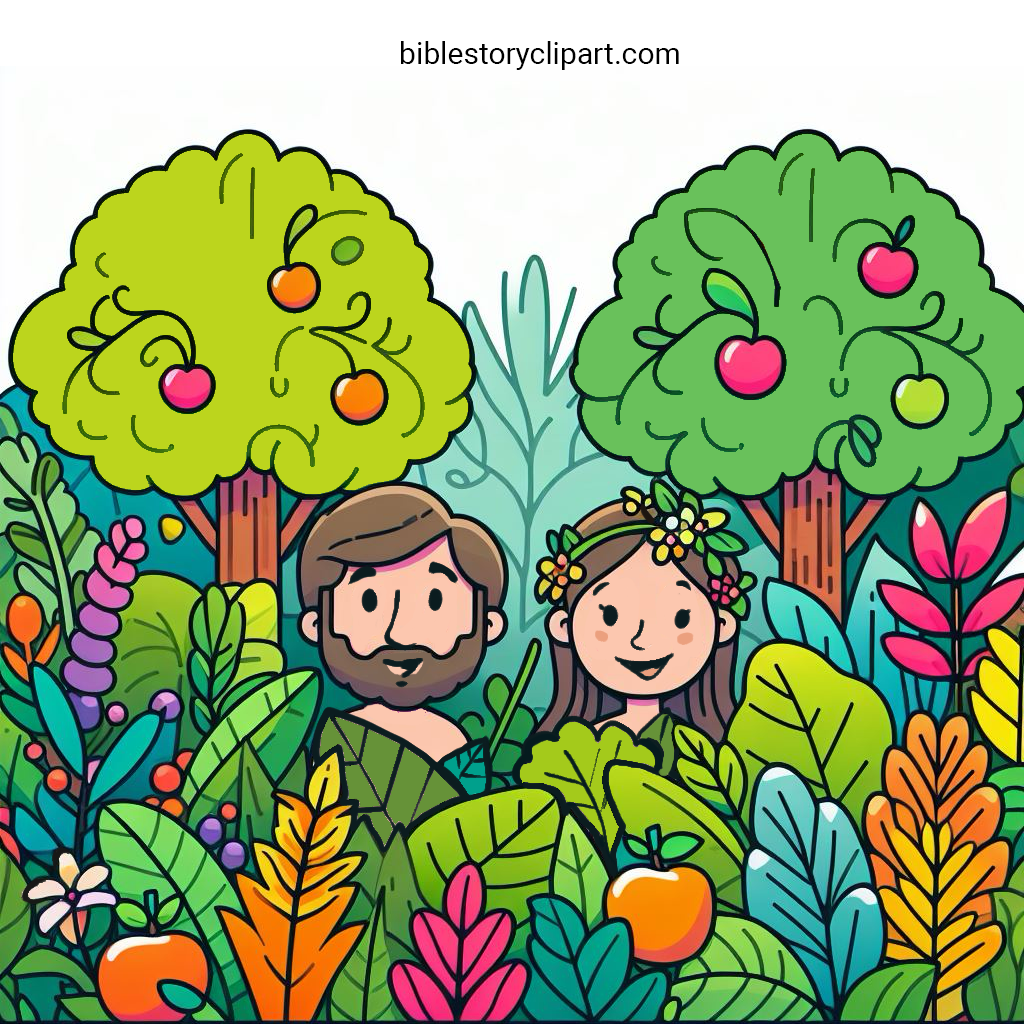
Why did God create Eve? Here are the Top Ten reasons.

#10. God was worried that Adam would become lost in the Garden because he was too proud to ask for directions.

#9. God knew that one day Adam would need someone to find his remote / keys / glasses for him.

#8. God knew that Adam would never buy himself a new fig leaf, or even know his size.

#7. God knew that Adam would never be able to make a doctor / dentist / haircut appointment for himself.

#6. God knew that Adam would never be able to remember which night to set out the garbage.

#5. God knew that men would never be able to bear the pain and discomfort of childbearing.

#4. God knew that Adam might need some help talking to the teenage kids about difficult topics, like relationships.

#3. Adam would need someone to blame his troubles on when God caught him hiding in the Garden (tee! hee!)

#2. The Bible says “It is not good for man to be alone”, and the Bible is usually right about these things.

And, finally, the number one reason that God created Eve:

#1. When God created Adam, he stepped back, took a long look, and said “By golly, I think I can do better than THAT!” (Haha!) – – – Fr. Jim (with help from Deacon Tom Sheridan)

The most colorful place on earth

Though they may look like plants, corals are made up of tiny animals called polyps. Coral polyps can take many forms. They may be large reef-building colonies, graceful flowing fans, and even small, solitary organisms. Thousands of species of corals have been discovered. Some live in warm, shallow, tropical seas and others in the cold, dark depths of the ocean. Coral reefs are some of the most diverse and colorful ecosystems in the world. An estimated 2 million species inhabit the coral reefs, rivaling the biodiversity of the rainforest on land. The reefs are home to various species of fish, crabs, mollusks, sponges, and algae. They are the protective habitat for young fish as they grow and have been the food source for many years for coastal peoples. But the burning of fossil fuels – coal, oil and natural gas – pumps excessive amounts of greenhouse gases into the atmosphere. Much of the carbon dioxide is absorbed by the ocean. Global warming would be much worse if it were not for the buffering effect of the ocean. But now the ocean itself becomes warmer and more acidic. These two things together threaten the health of the corals. They also cause the colorful color to bleach out into a white hue. In addition, warm water cannot hold as much oxygen as cold water. And so less oxygen is available for aquatic life under the sea. In his encyclical “On Care for our Common Home”, Pope Francis wrote that “every intervention in nature can have consequences that are not immediately evident”. With the psalmist, we pray: “How varied are your works, O Lord! …There is the sea, great and wide! It teems with countless beings, living things both large and small.” (Psalm 104). We have a duty to protect the most colorful place on earth. – – – Fr. Jim

I will love you and honor you

My parents never read books about parenting, and they never instructed their six children on how to behave. They modeled it for us, and then corrected us when we goofed up. Dad was only involved in one club – the Knights of Columbus – so that he could mostly be at home with his kids. Mom worked at a dry cleaner because they let her off work before we got home from school each day. Dad always invited me to help with his little household projects. Mom was a shy Iowa farm girl who never liked wearing dresses. Dad was a city boy who loved to tease her, and they smooched in the kitchen while she was cooking dinner. Summers were hot in east Texas, and on some nights we all slept on the floor in the living room because it was the only room with an AC unit. Those were my favorite times because Mom and Dad slept right there next to us. My parents never judged anyone by the color of their skin or the religion they professed. When Dad suffered a loss he never blamed someone else or claimed that he had been cheated. He took us all camping each year in the big Oldsmobile with a canvas tent strapped on top of the car. I was 24 years old when Mom, dying of cancer, touched my face from her hospital bed and remarked at how I had a few pimples again, just like when I was a teenager. I cried because I couldn’t imagine my world without her in it. Mom and Dad had each other, and somehow that was enough. If you want to raise happy children, live a good marriage. It is not too hard. It mostly just means keeping your promises. – – – Fr. Jim

The many gifts of a tree

One of the poems that I learned in grade school was “Trees” by Joyce Kilmer. “I think that I shall never see, a poem lovely as a tree. . . . A tree that looks at God all day and lifts her leafy arms to pray.” Joyce Kilmer was an American poet whose works celebrated the common beauty of the natural world as well as his Catholic religious faith. What are the many gifts of a tree? Through a process called photosynthesis, the leaves of a tree pull in carbon dioxide and water and use the energy of the sun to convert this into new growth.  That chemical reaction also produces oxygen – the very air that we breathe. It is estimated that one large tree can provide a day’s supply of oxygen for up to four people. Trees store carbon dioxide in their fibers and reduce the harmful warming effects that this CO2 has on our environment. This explains why one of the sources of climate change is the destruction of forests. Tropical rainforests are often called the “lungs of the planet” because they generally draw in carbon dioxide and breathe out oxygen. Of course, a tree also provides shade, which is why everyone likes to sit or park under a tree in the hot summer heat. Joyce Kilmer was killed in World War I by a sniper’s bullet while fighting on the Western Front. He was 31 years old. His poem continues: “Poems (and bulletin blogs) are made by fools like me. But only God can make a tree.” Fall is the time to plant a tree. So hug a big tree, plant a new one, and lift your arms too in a prayer of thanks.  – – – Fr. Jim

« Older posts Newer posts »

© 2026 The Yellow Wood

Theme by Anders Noren — Up ↑