Meditations on Faith in a World Observed

Author: admin (Page 4 of 7)

The King whose kingdom we create

On the last day of the Church year, in mid- to late November, the global Church celebrates the Feast of Christ the King. What does it mean for us to celebrate Christ as King? How do we understand Jesus Christ as a king anyway? A king of this world must keep order and peace in his kingdom. He does this by using a police force and punishment for those who break the rules. But Jesus said to Pilate: “My kingdom does not belong to this world.” His kingdom is not of this time and of this world, but of heaven and of eternity. And yet we pray every day that “your kingdom come, on earth as it is heaven.” If we want to know our King better, we do well to consider his teachings, the words that he spoke. More than any other topic, Jesus spoke about the Kingdom of God. But his words and actions turned the notion of kingdom upside down from the world’s notion. Instead of taking revenge, Jesus spoke of turning the other cheek. Instead of holding a grudge, Jesus spoke of forgiving those who have harmed you “seventy times seven times”. Instead of accumulating wealth, Jesus spoke of sharing with those who have less. In fact, Jesus said that it will be very hard for a rich man to enter the kingdom of heaven – not because of his riches, but because of his need to cling to his riches. In his eyes, a true king comes to serve, not to be served. Finally, the world tries to divide us – the rich vs. the poor, the white-skinned vs. the dark-skinned, liberals vs. conservatives, believers vs. non-believers. But in the eyes of Jesus, every human being is made in the image of His Father – regardless of their philosophies, their language or nationality, skin color or sexual orientation. The kingdom of God is very different from the kingdom of the world. This is why so few Christians are actually living God’s kingdom on earth. It is easy to get baptized. It is not easy to live our baptism as true disciples. Pilate presented Jesus to the Jews with these words, “Shall I crucify your king?” The chief priests answered, “We have no king but Caesar.” The Jewish leaders also did not understand true kingship. They were willing to succumb their faith in God to the Roman rulers, to the political realm. Are we doing any differently when we subscribe uncritically to a politician’s platform without considering the Gospel truths? As Jesus himself said to Pilate: “For this I was born and for this I came into the world, to testify to the truth. Everyone who belongs to the truth listens to my voice.” In the end, in the final days, the Kingship of Christ will rule over all nations. This is our faith. This is why we trust so deeply in our King. But his kingdom will only come about when we speak and act the truth in love. – – – Fr. Jim

Our duty and our privilege

This Fall we have a golden duty and privilege to vote for a new president and new members of Congress. In this important season, let’s remember a few things. First, listen to the candidates speak for themselves rather than what others say about them. Watch a video or two of an actual speech or an interview of the candidate to get a sense of their top priorities and how they would govern. No candidate is perfect, and we only get one vote. (We can’t vote 2/5 for this person and 3/5 for that person.) So we use our best judgment. Secondly, don’t let people convince you that you are choosing between good and evil. We presume that both major political parties have put worthy candidates forward. This presumption is essential to making a democracy work. A political competitor is simply that – a competitor, not a demon. Thirdly, the US Catholic Bishops have offered guidance for forming our consciences during an election year. Search for “faithful citizenship” and you will find it. Finally, pray for the safety of our candidates and all election workers. Violence has no place in our democracy, and “a nation divided against itself cannot stand” (Matthew 12:25). Pope Francis wrote: “Jesus’ parable of the Good Samaritan summons all Catholics to rediscover our vocation as citizens of our respective nations and of the entire world…We are called to direct society to the pursuit of the common good and, with this purpose in mind, to persevere in consolidating its political and social order, its fabric of relations, its human goals.” Government’s role, in the end, is about creating order and the common good so that all people may flourish in their homes and work and communities. To vote is to share in this role. What a privilege! – – – Fr. Jim

Wisdom from the belly of suffering

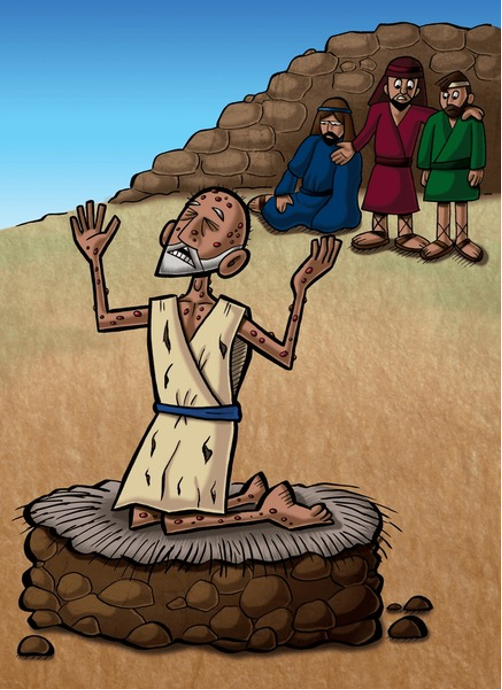
The Old Testament book of Job is a poetic classic that is often taught in college literature classes. The book deals with the deepest of human issues – Why do bad things happen to good people? How do we let go of old ways of thinking? How do we remain faithful to God amidst immense emotional and physical suffering? Job is a good man who undergoes a series of losses – first, all his cattle and means of livelihood, then his beloved children, and finally his own health as he suffers severe boils from the soles of his feet to the top of his head. Through it all, Job refused to curse God. “We accept good things from the Lord; and should we not also accept evil?” But he does curse the day of his own birth. “Perish the day when I was born…May that day be darkness.” In other words, may that day never have existed. According to Israel’s conventional wisdom, a good man will prosper. He will be blessed by God in this life and in the next. One should never have to choose between obedience and suffering. But the story of Job turns this wisdom upside down. It easy to give comfort to someone who is sick when we are healthy. It easy to give comfort to someone who has just lost a child when we have healthy children. Job gives voice to the suffering person. He says the things that a sorrowful person wants to say but can’t find the words.  That is the beauty of this book. Other books of wisdom – Proverbs, Ecclesiastes – may be reflections of a man with a full stomach writing from his study. But Job is an attempt to deal with life’s most existential questions from the vantage point of a man’s tears and pain. God only appears at the end of the book. He speaks to Job out of a storm – “Where were you when I founded the earth? …Who laid its cornerstone while the morning stars sang together?” We should not come to the book of Job looking for answers. We should come looking for companionship; someone with whom we can commiserate when our life too seems unbearable. – – – Fr. Jim

The blessings of being involved

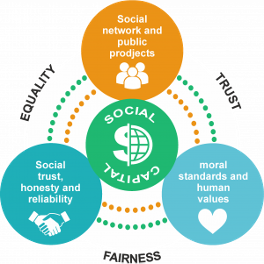
Is there a link between civil society and the success of a democracy? When the French aristocrat, Alexis de Tocqueville. toured the United States in the 1830s, he was impressed by the unprecedented way that Americans were making their democracy work. “Americans of all types are forever forming associations, groups that center around community service or common hobbies and interests.” Many parents were involved in a PTA (parent-teacher association) which helped them stay engaged in their child’s education. Knights of Columbus, Rotary and Lions Clubs, sewing circles, and garden clubs, all flourished into the 1950s. People learned how to socialize with one another in informal settings while learning the art of collaborating towards a common goal. Catholic schools were strong because parents were actively involved in raising funds. Volunteer fire fighters sold t-shirts that said: “Come to our breakfast and we’ll come to your fire.” (Ha!) Such organizations created a strong civil society in which people had a network of friends and learned how to solve problems collectively. We became more aware of our commonalities that were greater than our differences and did not need to rely so heavily on the state. We knew most of our neighbors and so we watched out for each other across the street. Researchers in the fields of education, urban poverty, and control of crime and drug abuse have discovered that success is more likely in communities where people are civically engaged in these voluntary groups. “It takes a village to raise a child” is an African proverb that means that an entire community of people must provide for and interact positively with children. Children who feel isolated or disconnected often suffer from anxiety. Do you want to make America great again? Join a group. Serve your community. – – – Fr. Jim

A tragedy and its legacy

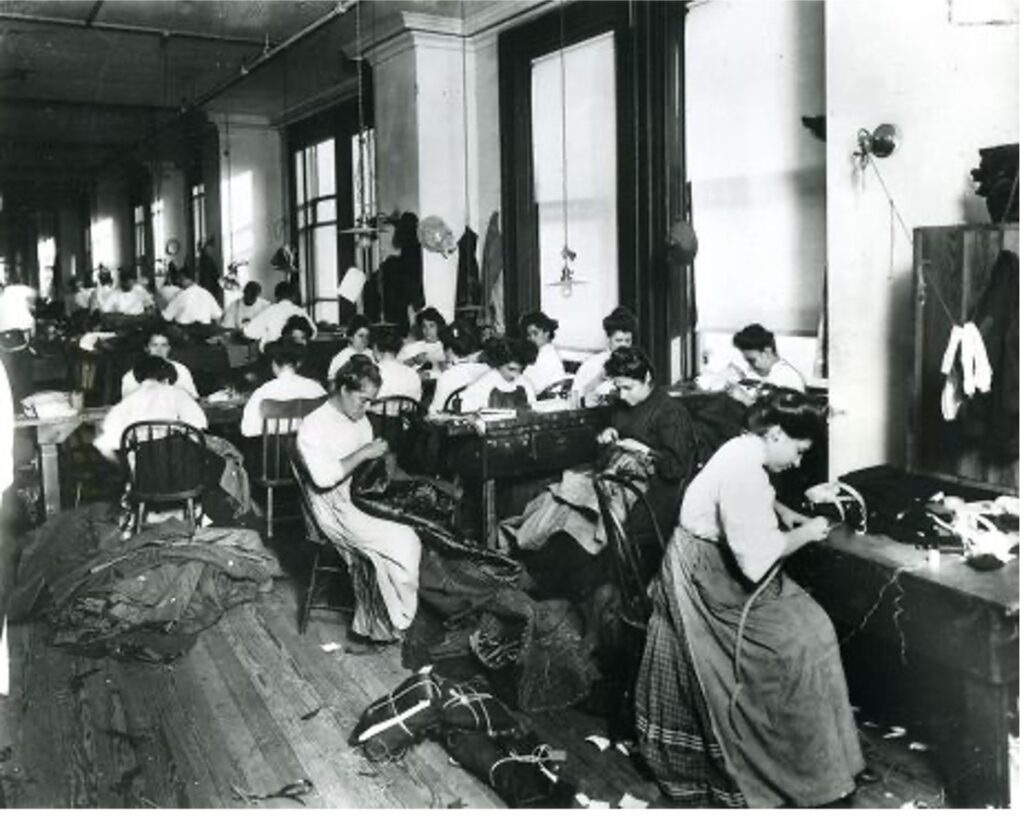
A “sweatshop” is any workplace in a very poor work environment, including low wages, excessively long hours, and unsanitary or dangerous working conditions. On one trip to Cambodia, I watched hundreds of women and children enter a garment factory, a sweatshop, early in the morning. But sweatshops were also common in the US in the early 20th century. The Triangle Shirtwaist Factory in New York City employed mostly women and girls to sew a blouse that was in high demand. Many of these girls were from Italian families escaping conditions of hunger. Or they were from Jewish families, escaping persecution in Russia or Ukraine. The daughters knew they needed to work in order to pay for rent and food for the family.  After all, economic security was the American dream. On Saturday, March 25, 1911, a fire in the factory killed 123 women and girls as well as 23 men who died from the fire, smoke inhalation, or from jumping to their deaths from the 8th, 9th, and 10th-story windows.  The doors of the factory had been locked by their supervisors from the outside to prevent workers from taking unauthorized breaks. There was no place to go but out the windows. The two youngest girls were 14 years old. One of the witnesses to this tragedy was Frances Perkins, who quit her job in order to make sure that these workers did not die in vain. Through her efforts, fire safety measures were put in place and the work week was limited to 54 hours a week. Many years later, St. Pope John Paul II wrote an encyclical on human work, Laborem Exercens, in which he argues that workers have a right to proper wages, appropriate rest, safe working conditions, and the right to organize. These are all measures of human dignity and respect for life. – – – Fr. Jim

Missing the mark

After college I spent a few years saving money to buy my first new car. When I finally went to pick it up, the saleswoman told me that I should wash and wax it once a year. Why? So that I would run my hands over every inch of the body and find any dents or scratches or rust spots that were beginning to form. We do the same thing when we prepare for the sacrament of Reconciliation. Here is a simple way to do an examination of conscience. In this order, look for i) serious sin, ii) sinful habits, and iii) minor sins. Write these down as you do your examination. God is Love Itself, so serious sins are any acts or feelings of hatred (anti-love). These include hatred of or bitterness towards any individual or groups of individuals – e.g., a political figure, a co-worker, Muslims or Jews, your mother-in-law, etc. There is no love of God when there is hatred of neighbor. Second, do you have any sinful habits that affect your ability to fulfill your vocation? An older priest once shared with me that smoking was a serious sin for him because it was an obstacle for getting close to his parishioners. Minor sins include missing Mass out of laziness, forgetting to do our household chores, snapping at someone out of a burst of anger, and so forth. The Biblical words for sin literally mean “missing the mark”. When we are aiming at love of God and neighbor but miss the bullseye, then we are committing venial, or minor, sin. But when we completely turn away from the target and point our arrows in the opposite direction, away from the God of Love, then we are committing serious sin. By a good examination of our conscience we can know the difference. – – – Fr. Jim

The most sacred symbol in creation

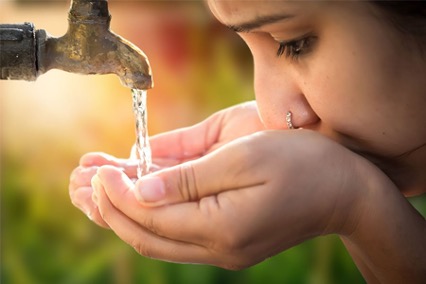
Water is life! Our bodies are about 60% water and the brain alone is 75% water. Every living creature – plant and animal – needs water to supply nutrients for growth and well-being. It is no wonder then that all religious traditions have held water as the most sacred symbol in all of creation. Native Americans revered water as a sign of the interconnectedness of all forms of life. Jewish and Muslim believers do ritual washings of the hands and body before times of prayer. The Bible begins in a garden nourished by a river rising in Eden (Gen 2:10), and it ends when “an angel showed me the river of life-giving water…flowing from the throne of God.” (Rev 22:1-17). Water plays the most prominent role in the first sacrament received in the Catholic Church. The priest or deacon first blesses the water of the baptismal font by calling upon “God, whose Spirit in the first moments of the world’s creation hovered over the waters, so that the very substance of water would even then take to itself the power to sanctify.” UNICEF estimates that more than 1,000 children under five die every day from illnesses caused by unsafe water, sanitation and hygiene. These are deaths that can easily be prevented by providing clean drinking water and hand-washing stations.  This past weekend I was privileged to be a part of the seventh OU International Water Symposium in Norman, OK. Five water experts from across the nation were summoned to select the next winner of the OU Water Prize, an award given every 2 years to someone who is working to meet the water needs of disadvantaged peoples across the globe. Each time we sprinkle ourselves with holy water, we are sprinkling ourselves with the gift of the Holy Spirit. – – – Fr. Jim

Restoring the world that was made for us

Since the dawn of humanity, the air that we breathe has been just right for us. However, it took many, many, many years for the air to be formed with just the right amount of oxygen and carbon dioxide. While the earth’s crust was forming, volcanoes released lots of carbon dioxide (CO2) and water.  Eventually, a simple form of bacteria developed that could live on CO2 and energy from the Sun, producing oxygen as a waste product. As they evolved over many millennia, plants and trees breathe in carbon dioxide and give off oxygen, while animals (including humans) breathe in oxygen and give off carbon dioxide. How convenient! The balance is perfect. If there was too much oxygen, fires would spontaneously ignite all around us! If there was no carbon dioxide, the earth would be much too cold to live in. In fact it would be 70 degrees below 0! This was God’s intention. “For thus says the LORD, the designer and maker of the earth who established it, not as an empty waste, but designing it to be lived in” (Isaiah 45:18). Over the last two centuries, we began cutting down trees and burning fossil fuels which together upset the balance of carbon dioxide, trapping far too much heat. The transition to clean energy brings more new jobs and improves the health of its citizens. But there are also theological reasons for the transition. As Pope Francis reminds us, the poor suffer first from global warming. It effects their very livelihood by impacting agriculture, fisheries, and forests. Texas produces more wind energy than any other state, and its current energy mix (wind /solar/natural gas/coal/nuclear) produces 38% less CO2 than 25 years ago.  The International Energy Agency (IEA) predicts that by 2025, renewable energy will surpass coal to become the world’s top source of electricity. In this way, we are beginning to restore the world that God made for us. – – – Fr. Jim

Magna Carta, the U.S. Constitution, and the Gospel of Christ

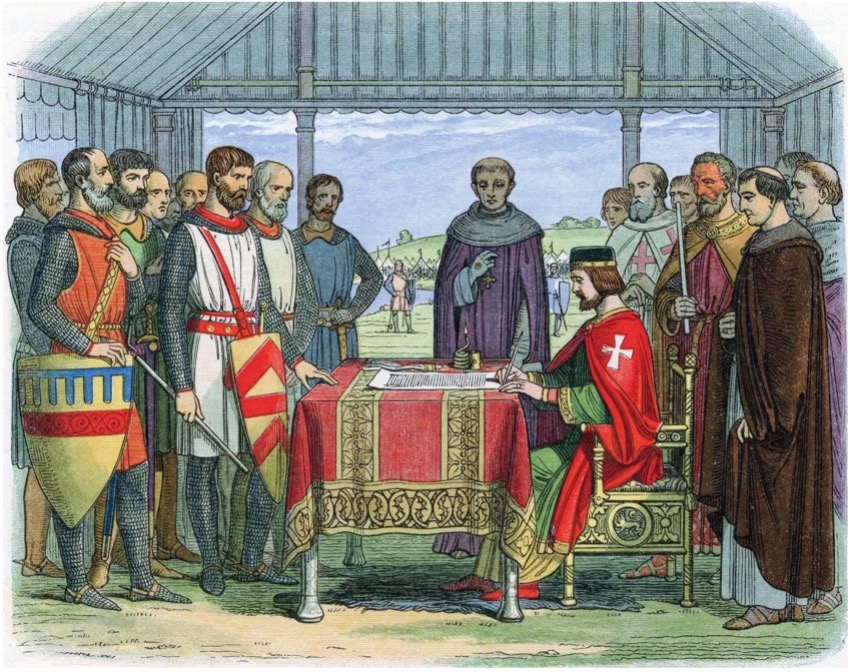
When I was in high school, I memorized the date on which the Magna Carta was signed (June 1215), but I had no idea why it was important. But now I know! Before that time, English kings (and other strongman rulers) could do whatever they wanted to their subjects, including taking their private property, taxing them heavily to pay for their comforts, preventing them from religious worship, or putting them in prison for no reason. The Magna Carta was the first agreement by the king and wealthy barons that everyone – including the king and his successors – should follow a written law. When the U.S. president and members of Congress are sworn into their office, they take an oath to preserve and obey the Constitution of the United States along with its 27 amendments over the years. This written document defines how we are to live together and govern ourselves as Americans. It describes how the three branches of government work together in a system of checks and balances. It also defines our freedoms and our rights, noting that all persons deserve “the equal protection of the laws” (14th Amendment). By adhering to the Constitution, we provide order and stability to our society.  The Gospel – the actions and teachings of Jesus – comes to us in a written form, but it is not the same kind of document. It does, however, provide “a lamp beneath our feet” to guide us on good moral and spiritual paths. The Sermon on the Mount in Matthew, chapters 5-7, is an example of how Christians should live. Here our Master calls us to “forgive even those who hate us”, to “treat others as we would like to be treated” and to “build our house on the solid rock of charitable actions”. In our baptism, we are pledging to follow these rules of order. – – – Fr. Jim

Forgiveness is a one-way street

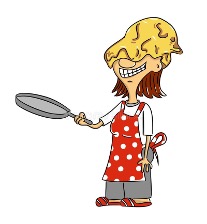
Forgiveness is the opposite of revenge. It is the opposite of tit-for-tat: “You did this to me, and so now I am going to make you pay for it.”  But in the eyes of Jesus, forgiveness is mercy, not justice. The forgiveness that Jesus expects of his disciples is a one-way street. It goes from me to you, and it is without conditions: “I don’t need for you to acknowledge your guilt, or to ask forgiveness, to say you are sorry, or to suffer any consequences. I forgive. I forget. And that is all.” I feel sure that this is why God created the day as our timepiece. With each new sunrise we can start new again. With each new sunrise, every person who has harmed us is now forgiven. This is not the way most people respond. This is not how the world typically reacts. But if we are not doing some things differently from everyone else, then we are probably not living the Gospel. When we finally “get the message”, it’s like getting clobbered in the face by a stack of pancakes!  Why? Because it releases a great freedom, freedom from anger and resentments that keep building up because you are too proud to be the first one – the only one – to forgive and forget. This is what Jesus means by being the Gate into an abundant life: “I came that you may have life and have it abundantly.” He included forgiveness in the prayer he gave us – “…Forgive us our trespasses (sins) as we forgive those who trespass (sin) against us.” And he modeled it by forgiving Peter who denied him and the soldiers who crucified him – “Father, forgive them, for they know not what they do.” Forgiveness is the beginning, the middle and the end of the Gospel. Go ahead, get clobbered. I dare you! – – – Fr. Jim

« Older posts Newer posts »

© 2026 The Yellow Wood

Theme by Anders Noren — Up ↑